3
Dec/12
0

The alpinist comes home

A Brief History of Andy Selters

By Leonie Sherman – Photos by Andy Selters

Andy at Concordia, Baltoro Glacier, Karakoram. Photo: Cecilie Skog

In 2004, Andy Selters made the leap from guidebook author to mountain literati. Before the publication of Ways to the Sky, Selters was known as the Shasta guy, or maybe the glacial travel guy. Afterwards he became known as the guy who redefined the way Americans view our relationship to mountains.

His history of North American mountaineering went beyond routes and dates and detailed our cultural climbing heritage in a single volume. It also won the National Outdoor Book Award and the Banff Mountain Book Festival award for history and was recently named one of the top five adventure books of all time by the Wall Street Journal.

Selters is not just a writer and a historian; he’s part of a lineage of Sierra rambler-artist-author-poets that stretches from Norman Clyde to David Brower to Yvon Chouinard. These climbers retreated from society into the Sierra Nevada and returned to share their experiences with society. The Range Of Light is not just a geographical presence in this state or indeed this country. These mountains are an economic, political and cultural force, thanks in large part to the efforts of this family of devotees.

But relatively few climbers in California have even heard of Andy Selters. Partly because he’s a pretty modest guy, and partly because many young “climbers” care more about the latest six-move variation at the climbing gym than actual mountaineering. But mostly, Selters simply hasn’t pursued fame. Rather than devote energy to self-promotion or recognition he has devoted his life, quite simply, to climbing mountains.

Karakorum, Pakistan. Photo: Andy Selters

For over thirty years, Selters has been tackling hard-core climbing objectives on some of the planet’s most dramatic peaks. In 1984, on his first climbing trip to Asia, he put up a first ascent on the northwest face of 20,608 ft Great Trango in Pakistan.

“We intended to climb this other big rock wall, but the approach was way too dangerous,” Selters recalls. “So we just sort of wandered around to the base of the Great Trango and were lucky to find our way to the summit.”

Four years later he put up two new routes on Cholatse, a 21,600 ft peak in the Everest area. In addition to his Himalayan accomplishments, he’s also the author of dozens of new routes, from hard ice to technical rock, throughout the Andes, Cascades and Sierra Nevada. This summer he bagged three unclimbed peaks over 20,000 ft in a remote northeastern corner of Ladakh.

The North Buttress of Mt. Kennedy is on the right skyline. Andy Selters and Bill Pilling made the 2nd alpine-style ascent of this oft-attmpted 7,000 foot route in the Yukon Territory. Photo: Andy Selters

Among the mountaineering elite, Selters is famous for his epics. In 1986, he and Kitty Calhoun set out to climb 22,651 ft Thalay Sagar, on Calhoun’s first Asian expedition. “That was a crazy climb,” Selters admits, “featuring long run out pitches on thin ice.”

But two-thirds of the way to the summit, a storm hit and pinned them to their broken portaledge for a week. They waited while avalanches roared past their precariously anchored shelter and amused themselves by rationing their meager provisions. “You can definitely last a week without food,” Selters says ruefully.

Unfortunately, 25 years later, Selters faced another unplanned alpine weight-loss regime, this time with mountaineer Bill Pilling. After a successful alpine-style climb on the north buttress of 14,000 ft Mt Kennedy in Southeast Alaska, a storm trapped them on the opposite side of the mountain from their base camp. They shivered and starved for six days until the storm cleared and their legendary bush pilot, Kurt Gloyer figured out where they were. But their troubles were just beginning.

Gloyer failed to achieve the necessary velocity for take-off and nose-dived the plane into a crevasse less than a mile from the spot of Selters and Pilling’s forced bivouac. The impact killed Gloyer, knocked Pilling unconscious and broke Selters back. “Getting out from under the dead pilot, with a broken back, that was like climbing the hardest off-width ever,” Selters recalls.

Selters and Pilling spent the night on the ceiling, inside the upside down plane. Fortunately, a rescue team arrived and their painful extraction began.

Selters’ climbing career began modestly. Born and raised in Southern California, a ninth grade science trip to Yosemite Valley piqued his interest in the great outdoors. A solo ascent of Mt. Brewer four summers later whetted his appetite, but it was a winter attempt to climb Shasta while a freshman at Humboldt State that sealed the deal.

“This guy from the college outing club, Boot and Blister, invited me,” Selters recalls. “I wore jeans and hiking boots; I’d never even seen crampons before. I was just some dumb kid from LA who didn’t even have enough sense to put on a jacket when I was cold.”

Great Western Divide from across Big Arroyo. Shot was taken during a multi-day project of climbing over the top of all the Kaweah Peaks. Photo: Andy Selters

Though he failed to summit Shasta, the agony and ecstasy he experienced that winter was the start of a life-long devotion. For the next several years he spent every moment he could hiking, climbing and exploring in the Trinity Alps, the Siskiyous, Castle Crags and the sea cliffs north of Humboldt.

“This was the 1970s,” he explains. “There was no beta. Pretty much everything we climbed was a first ascent.”
While a student at Humboldt, Selters pitched a Triple Divide Peak guidebook to Wilderness Press. They turned him away; but he passed the next summer hiking every trail in the area, taking photographs and re-updating the topographic map. The summer after that he pounded out the book on a rusty typewriter while working as the caretaker at the Sierra Club hut on Mt. Shasta.

“I basically lived on saltines, peanut butter and dreams,” he recalls. “But they took the book. Book-publishing was more lucrative back then. That little five-dollar book earned me more royalties than almost anything I’ve ever written.”

For a decade after College, he took a guiding job in Bellingham with the school that would later expand into the American Alpine Institute. His physical stamina, organizational skills and willingness to live on saltines and dreams allowed him to gain high attitude climbing experience, from Denali to the Himalaya.

“But then I turned 30,” Selters says. “I realized that I was driving this $500 clunker of a car around Bellingham while Dunham Gooding, my boss at AAI, was driving a Mercedes and building a house. He was making real money, and I barely had two nickels to rub together.”

Selters landed book contracts from the Mountaineers and Wilderness Press and asked Gooding for the summer off to pursue his writing ambitions. Gooding cut his hours back so severely that he quit his guiding job to focus on writing full-time. A labor dispute launched his writing career. Unemployment launched his quarter century long love affair with the Sierra Nevada.

“There are few places in America that have such a great diversity of landscape as the Eastern Sierra,” Selters explains. “The opportunity to enjoy great activities all year round is why I came, but I’ve stayed because I feel at home here. I love waking up and going to bed with the Sierra and the White Mountains in view. The rhythms of seasons and going up into the mountains and coming back to a small town have become my rhythms.”
Like many mountain lovers, he has scraped by on determination and odd jobs, selling photographs, articles and books, taking the occasional roofing job and guiding gig.

Lone Pine Peak after a winter storm. Photo: Andy Selters

When pressed to reveal his favorites from over twenty years of Sierra ascents, Selters demurs. “I relate to the Sierra the way Peter Croft seems to. The best climb is the one you’re on, or the one you just did, or maybe the next one.” He remembers first ascents on the east face of Mt. Tyndall and the north face of Mt. Humphreys with particular glee, and endorses the mid-fifth class northeast ridge of Mt. Darwin.

With so much experience on world-class rock and ice from the Canadian Rockies to the Karakorum, Selters’ devotion to the Sierra is significant. “It’s like a world that will accommodate and host you at whatever level of curiosity you have to go up, get immersed, and come back with a sense of experiencing a higher realm,” Selters says. “The lakes to swim in don’t hurt either.”

After breaking his back in 2001, Selters swore his expedition days were over. But a decade later, when Canadian friends invited him to explore a remote area in northeastern Ladakh with them he couldn’t refuse.
“I wanted to get a glimpse, at least, into the original nature of things,” says Selters. “That’s sort of a mythical idea, but these people raise most of what they need in their own territory, they’ve been doing that for many generations. They’ve never gone to war. And they live in a magnificent mountain range; they’re not just visiting. I figured these people probably have something to teach us. And of course it’s cool to climb mountains too.”

For most of us, a first ascent on even one 20,000-plus ft peak represents the crowning achievement of a lifetime. For Selters, this most recent expedition represented a scaling back of his climbing ambitions and an opportunity to examine the collision of traditional village life and the modern world. He returned with a burning desire to share his experiences with others.

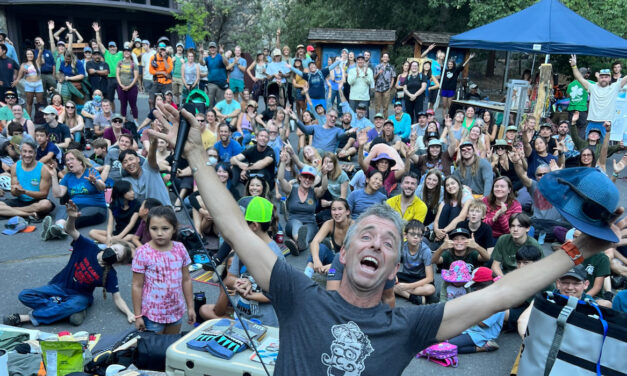
Which is another way of saying that one of his celebrated, quirky slideshows will be coming to a climbing gym near you.

Like Clyde and Brower, Selters has lived a life dedicated to mountains and people. Unlike Clyde or Brower, he has access to digital technology. Selters is not just a good writer; he puts together a mean slideshow as well. His mountain photography is world-class, and the combination of images, sounds and words create an experience not to be missed.

As this issue of ASJ goes to press, he is putting together an itinerary of presentations from his 2012 Ladakhi expedition. Check out andyselters.com for dates and locations, and some excellent photos as well.

Photo: Andy Selters

Photo: Andy Selters

Photo: Andy Selters

3
Oct/12
1

Sticky Rubber: The Roots and Future of Five Ten

A Conversation with Charles Cole

By Seth Lightcap

Founder of Five Ten, Charles Cole. Photo courtesy of Five Ten.

Where would we be as explorers of rock, trail and waterway without Stealth Rubber? Whether paired with a Five Ten shoe design or used as a resole for another brand shoe, the stickiest of all sticky rubbers has been crucial equipment for many of the most groundbreaking adventure achievements of the last 25 years. Stealth Rubber has been championed as the rubber to trust when loss of traction could have serious consequences.

Matching Stealth Rubber with a steady stream of innovative shoe designs has led Five Ten to grow from a niche climbing shoe company to one of the premier action sports footwear brands in the world. This evolution has been led every step of the way by Five Ten founder and Stealth Rubber inventor Charles Cole. A pioneering Yosemite climber with a stacked resume of bold El Cap ascents, Cole started the California based shoe company in 1985. Cole’s invention of Stealth Rubber and other climbing shoe innovations laid the foundation for a company that became known for it’s progressive athlete driven designs.

In 2011, Five Ten marked another milestone as Cole sold the business to shoe industry juggernaut Adidas. The merger has not slowed down Five Ten, nor the cutting edge climber turned rubber scientist Cole. In fact, the pace of progression has only picked up for the company. Adventure Sports Journal caught up with Cole to talk about these latest developments, the roots of Five Ten and the legendary polymer known as Stealth Rubber.

Charles Cole in Yosemite. Photo courtesy of Five Ten.

ASJ: What inspired you to stop climbing and start a climbing shoe business?

When I got down from the last major aid route I did on El Cap, Space, there was a note on the board at Camp Four that said, “Call Home.” That had never happened before. So I found out that my father had suffered a stroke and a heart attack. All of a sudden my family had no money and no means of support. I was 30 years old so I knew I had to do something for my family. I had always told myself, “You love climbing so much, don’t ever get into the business of climbing.” But in the end, if you’re trying to make money and that’s the one thing you know inside and out, go with what you know. It was obvious that I should go into the climbing industry.

ASJ: Why did you decide to make shoes and not cams or carabiners?

One of my assignments in business school was to make a list of ideas that I thought could make money as a new business. “Make a new rubber for climbing shoes,” was one of the ideas at the top of my list. No one had actually done any research on rubber for climbing shoes at that point. Climbing was just too small of a market, so the shoe companies had only been working with existing rubbers. With my engineering background I knew that it would be fairly easy to invent a new rubber, especially if no one else was working on it. I ended up creating an entirely new rubber compound. That was Stealth Rubber.

ASJ: How did you begin the process of inventing Stealth rubber?

I started by questioning what makes rubber have friction on rock. I came up with a few theories and then went to the Cal Tech library and read all the books on rubber to learn as much as I could. Then I took a bunch of rubber samples to a rubber company and asked them to duplicate the samples. Turns out you can’t reverse engineer rubber. But after reading all those books I could speak the rubber language so I started talking to the chemists at the rubber company about producing my own formula. My first formula was not all that great, but it was good enough. Then I got a call from the rubber factory about another formula I had been working on. They said they had screwed up on the sample but asked me to come check it out anyway. At first I said“No way, just throw it away and make the stuff I ordered.” But I went and checked it out anyway. The rubber was actually significantly better than the stuf I had formulated! So of course my first questionwas, “What did I do wrong?” That wrong formula became right, and we went on researching from there. I got a little lucky.

ASJ: How do you produce new rubber compounds now?

I have a world-class rubber lab 30 feet from my office. I put it together for fivcents on the dollar by buying equipment from eBay and bankruptcy auctions. The big rubber companies were never that interested in us because we didn’t do enough volume. As a result I could only get a new rubber sample made every two months and it takes ten to 15 samples to get a new rubber. Now that I have my own lab I can produce four samples in a day. For the Tom Cruise movie MI4: Ghost Protocol they asked me for a special shoe to climb the outside of the tallest building in Dubai. I made a brand new rubber formula that was ideal for climbing glass and metal in three days and had it on a pair of shoes in two weeks.

ASJ: The first FiveTen shoe was an approach shoe. Why did you focus on making an approach shoe before you made technical climbing shoes?

A climber in Joshua Tree had found a discount tennis shoe in Poland called the “Scat.” It wasn’t a very good name, but it was a good climbing shoe because it had this spongey rubber on the bottom and it was way more comfortable than the EB’s we had been climbing in. It was like a real shoe. They weren’t designed for climbing so the rubber wore out really fast, but they were like ten bucks a pair. All of a sudden everyone in SoCal was climbing in these Polish tennis shoes. So we had this wild idea to put our old EB or Boreal rubber on these Scats. As it turned out, the resoled Scat was a much more comfortable climbing shoe. So that became my original idea for the company. We would make this hybrid shoe with climbing rubber on the bottom that was really comfortable. The term approach shoe didn’t exist at the time, but we ended up making the first one.

Five Tennies ad 2012. Photo courtesy of Five Ten.

Five Ten Ad. Photo courtesy of Five Ten.

Ad from 2011. Photo courtesy of Five Ten.

ASJ: Beyond the high friction rubber, Five Ten was also the pioneer of several other innovative climbing shoe designs, including the first down-turnedclimbing shoe. The down turned last is now an industry standard. How did the idea come about?

I was bouldering in Red Rocks at the Craft Boulders with Randy Grandstaff and he wasn’t wearing my shoes. So I asked him, “Why aren’t you wearing my shoes? You’re my buddy.” He told me my shoes had so much “rocker” in them that it made it hard to pull in when you’re bouldering because the toes stuck up. So I was like, “What if I made the shoe flat, orbetter yet, what if I make it down-toed?” I got very excited about the whole idea, immediately called my patent attorney, and then drove straight to Wilson’s in Bishop, CA. They made custom climbing shoes at the time. I worked with Tony Puppo and Dan Asay to make the firstprototype of a down turned climbing shoe. Five Ten produced it a year or so later and called it the UFO in reference to when you were falling off of a boulder problem. The UFO also had split velcro flaps whichhad never been done before either. That shoe really put us on the map and began to change the look of the modern rock shoe.

ASJ: What inspired Five Ten to jump into the cycling shoe market?

We had been giving our climbers approach shoes to ride mountain bikes in for years before our first cycling specifishoe hit the market. But starting in 2000 we had a major change when the cyclists really started to discover our rubber. I remember seeing a rider on the cover of dirt magazine wearing our shoes, “Holy cow is that our shoes? Who is that guy? He’s number one in the world!” Soon after we worked with Jeff Steber from Intense Cycles to produce the first bike shoe withStealth rubber.

ASJ: What do you sell more of now, cycling shoes or climbing shoes?

The bike shoe market began very small, but it has doubled nearly every year. It was only a short time before cycling caught up to the climbing market. I am pretty sure cycling shoe sales will top climbing shoes for the first time this yea, and we will definitely have more cyclingshoe models than climbing.

ASJ: Five Ten has also begun to make shoes for other action sports such as slacklining, base jumping and free-running (parkour). How do you decide which sports to dive into?

We found ourselves doing very well in cycling and in climbing but the two disciplines were difficult to markettogether. We began wondering what the two sports have in common. Well, they are both dangerous. It took us awhile, but we finally came up with “Brand of theBrave.” None of the big shoe companies wanted to say that they were making shoes for the world’s most dangerous sports, so we ran right towards these sports and ended up capturing the niche. “Brand of the Brave” became a very easy slogan to apply to what we do. It describes all the sports we do perfectly, and it defines what we want to do.

ASJ: In 2011 you sold the company to Adidas. Why?

I’ve had design ideas for the last ten years that I couldn’t afford to make happen. With Adidas I can make them happen. It was the perfect match. We were doing things that they can’t do under their own name, and they brought in much needed capital. There is a lot of innovation going on now at Five Ten. We’re working on some really beautiful and elegant solutions for a few long-standing design problems. I only felt I could sell the company when I had a good feeling and trusted the buyer. Adidas is athlete-driven and they realize that we are experts at what we do. We have become a bigger company, but no one wants us to diverge from our roots. At this point they are still allowing us to do all the crazy stuff that we always have.

ASJ: What can we expect in the near future from Five Ten?

We will be introducing at least two new and very different technologies into both climbing and cycling soon. We’ll have a new BMX shoe in 2013 and a new climbing design. For this climbing shoe, I used the Anasazi design and pushed it into a wider shape that has the same power, but is more comfortable because your toes aren’t so crimped. This will result in a completely new shape and feel. For many applications, it will be our highest performing shoe yet.

ASJ: Five Ten climbing shoes are made in California, while all other Five Ten shoes are made in China. Will this production plan continue?

Manufacturing climbing shoes is a speciality operation. They are all hand made. I can make far, far higher quality climbing shoes here in the US than in China even though I am going to pay a lot more to make them here. Our company is about quality. We’re never going to be a price point company.

ASJ: What do you think has been the secret to Five Ten’s continued success?

Our key to success this entire time, has been to listen to the athletes. For example, I was climbing in the Frankenjura in Germany with Ben Moon and Wolfgang Gullich. Moon, being the Brit, was making fun of all my products, “Oh yeah, I never climb in your shoes, look at those toes, they are dead flat. I need a pointytoe. Your shoes may work on granite, but they don’t work on limestone. See how I can put my foot in these pockets.” They were all wearing Boreals. So I was thinking to myself, “Fucking pointy toes, I’ll give you some fucking pointy toes!” I went home and made what became the Anasazi. That shoe blew everybody’s mind because it had a really pointy toe. I’ll always listen to constructive criticism about our shoes. I really listen because I know that if I do what is best for the athletes, we will be in good shape as acompany.
—————————————————————————————–
NEW FOR 2013

Tennie MSRP: $120 The iconic Guide Tennie is the most popular approach shoe in the world; we've upped the ante with two new exciting colors. The perfect date for mixed terrain, the GT is designed as a one-shoe solution for hiking and climbing; the shoe has an internal rocker to promote a healthier stride, climbing friendly toe and proprietary midsole and outsole package to regulate flex and increase stability.

Stonelands VCS MSRP: $140" The Stonelands is designed for those who aren’t mainstream climbers. Built on an all-new last, the Stonelands has a notoriously comfortable fit that bellies its inner strength, just like the climbing legends of the past and present. The splitgrain leather upper conforms to the foot like a second skin. Inside is Five Ten's secret performance weapon, our new Western Heel Cup and midsole stiffner

Freerider VXi MSRP: $120 Introducing Five Ten's new Stealth Contact outsole that allows you to pull, push and adjust, the new Freerider VXi is designed for casual all-mountain flat pedal riders to the aggressive downhill racer. Riders will instantly understand the advantage of the new Contact outsole that's treadless under the foot's ball for float. The new Freerider VXi has a breathable, abrasion-resistant upper, a new performance-fit, and an asymmetrical welt that provides extra crank-side durability.

Line King MSRP: $130 Designed for slacklining, BMX tricks, freeride and urban biking, the highly versatile Line King is the perfect choice for people who live the outdoor life. From flat pedal bike riding to hair raising highlining, the high-topped Line King is all about fun, performance, and technical advantage. For 2013, Five Ten proudly introduces the Andy Lewis Line King (of Super Bowl Fame).

30
Jul/12
0

SLO Op Climbing Renovation Expands Offerings, Supports SLO Area Veterans

Photo: Kelsey Kay Stewart


FOR IMMEDIATE RELEASE
 
SLO Op Climbing Renovation Expands Offerings, Supports SLO Area Veterans
 

San Luis Obispo, CA, July 30, 2012 – Increasing membership and the moveout of SLO-based Bouldering.com afforded SLO Op, the country’s first non-profit bouldering gym to expand its offerings this month.
 
With a membership of about 800 and growing, the bouldering gym (a climbing gym offering only unroped climbing with padded floors for landings) secured a loan through Founder’s Bank in order to expand and renovate the facility. Now featuring a private weight room, more climbing space, a reception area, and a new paint job, the club could very well be the best of its kind in the country. Says executive director, Kristin Horowitz, “What started out as a tiny club to benefit climbers in the community has expanded beyond what we ever dreamed. It’s been wonderful to be able to have the kind of budget to go, ‘You know, we’ve got extra money and space now, what can we do to make it even more awesome?’ That’s such a blessing when so many other businesses are struggling.”
 
SLO Op’s unique business model has created a loyal membership. In its third location in ten years, it was able to secure the larger facility and original buildout by loans and gifts made by community members who then became board members. After three years, the loans have all been repaid and a new loan was taken out to support SLO Op’s growth.  The creativity of the gym’s funding caught the attention of bestselling author Chris Guillebeau’s newest bestseller, released in May, The $100 Startup.
 

Photo: Kelsey Kay Stewart

SLO Op is also pleased to announce a partnership with SLO County’s Veteran’s Outreach Team. One of many organizations taking part in the program, Gabriel Granados, Veteran’s Outreach Coordinator says: “In an effort to honor those who served, our program is developing opportunities for local veterans to participate in activities and enjoy benefits provided by community businesses and organizations. This will include events at SLO Op Climbing Gym, fielding a team for the Laguna Lake Mud Mash, sand boarding on the dunes at Montana de Oro, going on hikes around our county, and ziplining at Margarita Adventures. We appreciate the courage and dedication of veterans who have served our country and want to demonstrate our gratitude for their sacrifice.”
 
SLO Op welcomes any nonprofit community organization looking to better the lives of individuals to contact them regarding free climbing nights, donating paid staff time and memberships upon approval of the program and desired dates and times.
 
For more information about SLO Op, call Kristin at 805 748 1478 or visit www.slo-opclimbing.org
For more information about the Veteran’s Outreach team, call Gabriel Granados at 805 234 7923.
 
###

9
Feb/12
1

Unseasonably Sweet

Roadside ice and rock climbing from the Sierra’s high passes makes for a memorable start to winter
By Nick Miley

Ice skating on Lake Tenaya. Photo by Nick Miley

In many ways this winter in California has been completely out of the norm. It’s not like we had a six-week dry spell at the beginning of last winter. Oh wait, yeah we did. The difference: it was preceded by a few hundred inches of snow and followed by many more.

This year, well, it was preceded by bare ground. It was crazy to see the mountains ringing Lake Tahoe almost completely barren into the middle of January, save for some strips of manmade snow at the ailing resorts.
Despite the complaints of many, the acute absence of precip allowed for some very unique opportunities on the high passes of the Sierra. It was the latest ever closing dates for Tioga and Sonora passes.

Scraping 10,000 feet, Tioga Road (Hwy 120) through Yosemite is the highest pass (9,945 feet to be exact) in California. Sonora Pass (Hwy 108), topping out at 9,624 feet, is a close second. Usually these trans-Sierra routes are shut down as soon as the snow starts to fly in October or November. This year, Tioga didn’t close until January 17!

According to the National Park Service, which has maintained the Tioga Road since its completion in the summer of 1961, the previous record for the latest closure of the pass was January 1, 2000. The average date is November 1st.

While moisture was absent, winter did show up with some cold temps, at least at night if not through the day. Through much of the two-month dry spell, the weather remained consistently sunny and cold. As a result, there was plenty of exposed ice to climb on northern aspects of rock faces. Conversely, daytime highs provided south facing cliffs with some stellar rock climbing conditions.

Hearing of such strange happenings from other climbers drew this skier out of a powder-deprived stupor and motivated me to go have a look. Over three weekends in the beginning of the calendar winter I explored these passes — well known to me in summer — in a whole new hue.

Despite all of the great climbing, the true draw of the high passes is the tremendous alpine beauty accessible from the comfort of a car. Anyone who has driven over Tioga Pass will recall the perfect placement of Tenaya Lake. Ever matching the mood of its mountainous frame, Tenaya (8,150 feet) is the reflecting pool of Yosemite’s grand high country. No doubt the road along its northern shore has provided many a view of this gem who would have otherwise not made the journey, especially in winter.

Although it’s not unusual for Tenaya Lake to freeze, it is quite rare to be able to drive up to it in all its snow-free, glassy glory. On one trip over the pass some friends and I made our way out onto the thick, bubble infused, transparent ice. Sans skates we walked flat-footed to the center and took in the incredible view from a unique vantage point.

More than just providing access to frozen lakes, the open passes allowed the uncommon opportunity to approach the ice flows that formed up on the domes and cliffs bordering these roads. Websites featured tantalizing photos of climbers swinging their picks on blue, vertical ice.

At the end of December, I had the pleasure to climb a 110-meter flow on Drug Dome in Tuolumne Meadows. As we wrapped up the ice route we were dumb struck by the absurd notion that we should have brought the rock gear as well. The wind lay calm and the slanting sun beat down on the surrounding domes. Ice was not the only climbing medium in good condition. The juxtaposition of quality ice climbing on one aspect and comfortable rock climbing on another was bizarre, another seeming absurdity befitting the “Only in California!” cliché.

Ice climbers on Drug Dome, Tuolumne Meadows. Photo by Nick Miley

This peculiar reality factored into the plans for following weekends. On my final trip before the storm that ended our summery winter, a friend and I ventured to the top of Sonora Pass for some alpine cragging on a newly developed cliff. Although we packed down jackets, we were surprised to find that T-shirts were just fine. In fact, on the crag’s pumpy leads they became soaked with perspiration. On the following day we headed down to Yosemite Valley where the T’s were shed and we climbed in perfect fall-like conditions without another climber in sight — a phenomenon at least as rare as the weather!

For many of you, the quality climbing — or hiking or mountain biking or ice skating — was no substitute for sliding on snow. However, this unique opportunity to venture into a snow-free high country in winter was one worth taking advantage of, one that will provide memories long after the snow flies.
I’ll admit, I still prefer snow to ice or rock in January. But rather than pout, it’s infinitely better to adapt your outlook and outdoor activities to what mother nature has to offer. Therein, new discoveries and adventures lie.

Nick Miley is a freelance writer living in South Lake Tahoe. He spends his free time exploring the Sierra, learning its history and writing about his experiences. You can contact him at crowdfreetahoe@gmail.com. Read more at his blog: tahoepulp.wordpress.com

2
Feb/12
0

Dale Bard: “In the dead of winter”


A selection from the new book, Yosemite Epics: Tales of Adventure from America’s Greatest Playground, compiled by ASJ contributor Matt Johanson.

In the mid-70s, renowned “dirtbag” climber Dale Bard decided to take his first backcountry ski trip — a big one, some 250 miles along the Sierra Crest, in mid-winter with friend and wilderness ranger Nadim Melkonian.
Over the next 44 days, they were pummeled by heavy snowstorms, narrowly escaped avalanche burial and courted starvation. But it was all part of a grand adventure, according Bard.
………………………………………………………………………….

A fixture of Yosemite in the 1970s, Dale Bard became famous for both his bold climbing and his frugal lifestyle. Bard lived in a converted bakery van and sustained himself on peanut butter and potatoes for weeks at a time, earning kudos from Climbing Magazine for perfecting the “dirtbag” lifestyle. Though with first ascents of Half Dome’s Bushido and El Capitan’s Sea of Dreams and Sunkist routes to his credit, the climber wrote his name indelibly in the record book.

Bard describes in glowing terms a formidable ski trek that most would consider a grueling ordeal. With companion Nadim Melkonian, the 23-year-old outdoorsman set out to trace the John Muir Trail in January of 1976. Expecting good weather and fast conditions, the pair planned to finish in three weeks. But storms repeatedly pounded the skiers who survived multiple avalanches and dire food shortages on a journey more than twice as long as expected. —Matt Johanson

_________________________________________________________________________________________________________________________________
“We kept skiing, but all hell broke loose at Muir Pass. A huge storm nailed us and pinned us down for three days.”
_________________________________________________________________________________________________________________________________

When I was young and foolish, Nadim Melkonian and I took a fairly extensive ski trip through the mountains, about 250 miles. We had planned to go in the dead of winter, because I was a knucklehead and wanted a true winter ski tour. We did the High Route from Sequoia National Park to Yosemite Valley. We came in on the west from an area called Panther Gap, over the Sierra to Mt. Whitney, and then we grabbed the John Muir Trail, sort of, because of course you can’t see it in winter.

I wasn’t supposed to ski with Nadim, but his partner bailed out on him. Nadim was bummed and moping around. He had already cached all this food along the route. So on a lark I decided to go with him. I had no gear, so I went down to the mountain shop and bought everything I needed. At that time, I had an alpine skiing background, not any cross country skiing experience per se. The only downside was the equipment was so different. But once you know how to ski, you just go skiing. I got on a pair of Atomics, truly skinny, metal-edged skis I had to repair multiple times on the trip. We left on Jan. 20 and planned to take 21 days. We were gone 44.

At the time, Nadim was the Snow Creek Cabin ranger, which was most helpful. We got to use a lot of the wilderness rangers’ cabins along the way to stash our food. Every once in a while, we actually got to spend a night in a cabin, which was cool. We had one the first night, and one by Charlotte Dome, and another by University Peak. So for a while it was almost like hut skiing, and we got spoiled.

We made it over Forester Pass before we got nailed by the first storm. We were on schedule, moving fast. We thought it would be no problem to make 15 or 20 miles per day. Then once we got over Forester, four feet of snow dumped on us. We kept skiing, but all hell broke loose at Muir Pass. A huge storm nailed us and pinned us down for three days. We pitched our tent inside the John Muir Hut, a stone structure there which kept us out of the whiteout. But we were running out of food and had to get to our next cache.

More than 12 feet of snow came down in two days. We were breaking trail chest-deep. This is pre-GPS and we got totally disoriented in Goddard Canyon. It got dark and we were still in whiteout conditions. We set up our dome tent in a grove of trees. You could just hear the avalanches kicking down all around us. We heard this one come down pretty loud and the walls of our tent started getting spattered. An avalanche produces quite a gust of wind.
Later, Nadim looks at his watch. Even though it’s pitch black, he says, “Dale, it’s 8 in the morning.”

I say, “That’s ridiculous!”

We unzipped the door of the tent and there’s a wall of snow there.

What happened was the avalanche broke up as it hit the trees but still buried our tent under five feet of snow. We had to shovel the snow into the tent to dig out, and then we had to dig the snow back out of the tent again. We had just one small snow shovel so that took a couple of hours.

It was really hilarious and we kept laughing at each other. We were totally lucky and dodged a bullet. We were just far enough out of the avalanche’s path. As I look back on it, we should have died. Obviously we were idiots as far as avalanche awareness goes. The next day a second avalanche buried us up to our knees.

At this point, we were getting very close to not making it. We survived on one tea bag and half a stick of butter for three days. We were way off course and finally we had to break into this dude ranch. We were so hungry and when we broke in there was a jar of peanut butter on the table. Neither one of us could open it because our cold hands didn’t work. So we sat in the hot springs there and salivated over the jar until we had the strength and the coordination to open it.

Inside the ranch there was a 55-gallon drum full of food sealed up for the fall. We opened it up and resupplied and that enabled us to get to our next food cache. If we hadn’t made it to the dude ranch, I think it would have been pretty critical. I left a note with my address saying what we had done and to contact me for damages. I left $10 I had with me. They saved our asses so I figured it was the least I could do.

Ten more feet of snow dumped while we were there. Finally the weather cleared and we left the ranch. Then this helicopter came cruising by us. There were a lot of rescues going on in the mountains at that time because the storm caught a lot of folks unprepared. The pilot held a hover and asked, did we want a rescue? We said, “Hell no, we’re fine!” By that point we were absolutely determined.

And so we went on to our next food cache, which was 20 feet down in the snow. We dug down and got that and kept on skiing. In a way, I hated it when we got to a food cache. It bummed me out because I’d have a beautiful light pack, and then when we got the food, I’d have to carry 45 pounds again. But every cache had a little treat, like Oreos or M&Ms, so we knew we’d get something special and that made us happy.

On a tour that long, you get used to it, kind of like big wall climbing. You get up in the morning and ski until dark. At the end of the day, you make camp and do your chores and go to bed. Then you get up and go again. It’s like a 9 to 5 job.

We were caught in more storms and whiteouts after that. It was a pretty epic year. We ran out of food again. We managed to come in behind Mammoth Lakes. There was another hot springs area that had a cabin, and we broke into that and got more food. There was a pay phone there and though we had no money, I called collect and luckily reached my girlfriend Janet. By this time we were 20 days late and everybody thought we were dead. So she was glad to hear from me although she was mad at first.

We got nailed by a horrendous storm on the back side of Mammoth and contemplated skiing out. I looked at Nadim and said, “We’ve been fighting for this trip the whole time, and there’s maybe 45 miles to go.” He looked at me and we agreed to keep on going. We wanted it and by that time we had skied almost 200 miles. What’s another 45? It seemed like a mere pittance. We were just three days from Tuolumne even with the trail breaking we had to do.

The weather broke and we had some blue bird days. Finally we hit Tuolumne Meadows. We were out of food again but knew of the wilderness post up there. We really surprised the rangers there when we pulled up. “Where are you coming from?” they asked. When we told them, they looked at us like we were nuts. Anne Macquarie and her husband Chas took such good care of us. They made us this wonderful meal with fresh bread. We stayed two days there. We were in heaven and didn’t want to leave.
_________________________________________________________________________________________________________________________________
“At this point, we were getting very close to not making it. We survived on one tea bag and half a stick of butter for three days.”
_________________________________________________________________________________________________________________________________

Then we just skied back into the Valley. It was very surreal when we got a little bit below Snow Creek Cabin. When we put our skis on our packs and hiked on dirt, that was a very interesting thing after so long in the snow. And it was just weird to see people again. I went to see Janet at the restaurant in the Valley where she worked as a waitress. By this time I was sub-100 pounds. Everyone looked at us like we were ghosts or something. Janet dropped everything and ran over and put a wet one on me in front of the entire restaurant. Then she sat me down and fed me. I had a craving for hot chocolate and whipped cream. I must have had ten cups of that stuff in a row!

Next spring, I’m in Yosemite and I got a letter in the mail from the dude ranch people. The note said they were glad to help out and they returned my $10!

I never looked at it as life-threatening. It was something where we persevered. Nadim was a good partner to hang with, real solid. I learned a lot about skiing and became a better skier. I was such a knucklehead back then. I thought I was invincible, so I did stupid tricks all the way through the trip in steep, scary bowls. I look at those bowls today and there’s no way I would do that again.

As I’ve told many people, I don’t plan an epic. I didn’t plan this to be an epic. Sometimes you’ve just got to work through it. It was just a good adventure and fun to be out there.
###
Ironically enough, Dale Bard, the one-time self-described “idiot of avalanche awareness,” is now the chief operating officer for Ortovox USA, a leading maker of avalanche transceivers, shovels, probes and backpacks. Though known mostly for his impressive rock-climbing exploits, Bard is also a talented skier who ticked some fearsome first descents in the Eastern Sierra, including the classic Cocaine Chutes above Tioga Pass. And yes, he’s the brother of the late Allan Bard, a well-known mountain guide who died while climbing the Grand Teton in 1997.

1
Aug/11
0

Noah Kaufman: “Miracle”

A selection from the new book, Yosemite Epics: Tales of Adventure from America’s Greatest Playground, compiled by ASJ contributor Matt Johanson. In a riveting tale, Noah Kaufman, a visiting med student who would later become an emergency physician in Yosemite, recounts how his first big wall experience, climbing El Capitan’s famous Nose route, plays out in miraculous fashion.

……………………………………………………………………………………….

Climbers in distress from fatigue, weather or the difficulty of the task at hand rightfully trust their properly-used gear to protect against catastrophe. Many will lose sleep to learn that a single mistake can cause the most terrifying equipment failure imaginable. Such was the shocking near- death experience of three men climbing high on El Capitan in June of 1999.

Noah Kaufman, 24, was visiting the park for the first time. Then a medical student from Tulane University in New Orleans, he later became a doctor of emergency medicine at Yosemite Medical Clinic. Kaufman, his friend Bernard Guest and their new acquaintance who became known as “Falling Noah” started up The Nose (5.13b/A2) in search of a 34-pitch adventure. Few have returned from any climb with a more unforgettable and life- changing experience. —Matt Johanson

When I first arrived in the valley, my jaw dropped to my knees. I didn’t know anything like that could exist in the world. It was way more impressive than anything I had seen up to that point in my life. I was absolutely pinching myself trying to take it all in and not believing what I was seeing. Every minute I had to stop, get out of the car and look around. I couldn’t stop smiling. It seemed like the best place ever.

After my first year of medical school, I was psyched to get out and climb. A couple of friends and I came to Yosemite for a month, mostly to climb boulders like Midnight Lightning. I was so excited to be free that I dyed my hair green before I showed up in the valley. I knew the big wall of medical school and residency I had in front of me.

Up until then I had never really even considered climbing big cliffs, but suddenly it was obvious why those things had to be climbed, and I felt I would probably end up on one of them. One of my good friends who came along was Bernard Guest, who was more into technical aid climbing than I and he was really psyched to do a big wall.

“Do you want to do The Nose?” he asked.

“Which one’s The Nose?” I said. I really didn’t know much about aid climbing and had never done a big wall. We went to El Cap Meadow and he pointed it out.

I thought it looked incredible and we decided to do it.

Because we’d never been on it and since I had done zero aid climbing before, we went to the Camp 4 bulletin board looking

for another partner. We found a guy named Noah with long blond hair who looked like a rocker and we hit it off. He told us he was a 5.13 climber and had done The Nose before. “Perfect!” we thought. “This guy’s going to take us up and show us the ropes.” But it didn’t turn out that way.

We all contributed gear, racked everything and loaded our pig (climber’s slang for a haul bag). The Nose starts with mostly slabby climbing. I led the first pitch. On the first day we climbed four pitches to Sickle Ledge. Noah rapped to the ground to sleep that night. Bernard and I wanted to really experience the wall, so we slept on the ledge. Noah came back in the morning and we had a really fun day climbing the Stoveleg Cracks. We were leapfrogging and taking turns leading. I learned how to jumar and the three of us were getting our system down. But we only made it to Dolt Tower on the second day when we had intended to get to El Cap Tower.

At the end of day two we started to realize that maybe we didn’t have enough food and water. We thought the climb would take three days but we weren’t moving as fast as we thought we would. I

was pretty much the strongest free climber of us and I led as much as I could. I did some aid climbing and some French free now and then. Bernard was a methodical superstar. We thought Noah would be a lot stronger, but he was falling on things a lot easier than 5.13. Maybe he had done The Nose before, but it just didn’t seem like it. The rock doesn’t lie, and he really didn’t seem to know what he was doing. But neither did we and he was a nice enough guy so Bernard and I decided to roll with it.

Eagle Ledge is a decent-sized ledge but not huge, about a foot wide and five feet long. The three of us barely fit on it. At this point, you’re 18 pitches up and the climb becomes more vertical. Noah took the lead while I belayed him and Bernard hauled up the pig. Noah was jamming and lying back and he clips into a cam about seven feet up from the ledge. Then he climbs higher to about 15 feet above the ledge. He’d made some remarks earlier on the climb that seemed to show he was scared, and he looked insecure liebacking this pitch.

“Oh man, guys, I think I’m going to fall,” he said.

That was kind of a weird thing to say and Bernard and I looked at each other, confused. This guy told us he climbed 5.13, and now he seemed real scared and intimidated climbing 5.9.

Finally I said, “Okay, fall. You’re on belay, man. You’ll be okay.” So he did. What happened next took place in an instant but I could replay it in my mind for eternity.

He fell and he didn’t just slip off the rock. He jumped outward from it. Maybe he didn’t want to hit the ledge and break an ankle. But when he jumped out, he made the rope tight going from me into the one piece he placed, into a crack and around a sharp corner to his harness. Bernard and I were watching and all of a sudden there was an explosion. A cloud of sparkling dust filled the air and Noah fell straight down. He landed on the ledge and came to a complete stop. I can remember a lot of things in my life but nothing with more vivid clarity than that moment.

At first we thought that this fixed piece had blown out of the crack, but that wasn’t it. Noah had two feet of rope hanging from his harness. I was the first person who realized what had happened. The brand new rope serrated instantly on a sharp arête during his fall. Most climbers use a runner in that spot to protect the rope but Noah hadn’t done that. He had landed on the small ledge through sheer luck. He stood there unprotected and didn’t even know it. I grabbed his daisy chain and clipped him into the anchor with a carabiner without even stopping to think.

“Guys, the piece did not blow,” I told them. Then they both saw the rope’s cut ends, one on Noah’s harness and one on my belay. We had this long moment of silence while we all visualized him falling a thousand feet and becoming a ketchup smear on the slabs below. Noah’s shirt was off and I could see his heart pounding as he put it together. Then he knelt at the belay and started sobbing.

“Guys, I’m out of here! I’m done. Let’s bail, let’s bail now!” Noah cried. He was obviously horrified. I really felt for him but I was undecided about whether to keep going or not. But Bernard said, “Hell no, we’re going to the top.” He grabbed the serrated end of the belay rope, tied a figure eight into his harness, grabbed the rack and jumped onto the pitch. So we just kept going.

During the next three days we ran out of food and water so we started drinking whatever nasty stuff we could find. Most parties bring too much water and leave it behind, so The Nose has old milk jugs and half-full Gatorade bottles behind cracks and on ledges all over it. They had been sitting there so long that the water tasted like liquid plastic.

Other things went wrong. We dropped some aid gear and an ascender so someone had to use a prusik knot the rest of the way. Then the pig got stuck before the Great Roof and in several little chimneys. We had to rappel down and free it. And the whole way up, we were all scared to death that the rope would cut again. I was convinced that I would die before the top of the climb. Noah had almost died and at a certain point I got so tired that I became resigned to it. We were so inexperienced and in so far over our heads.

But we also saw some amazing things on the way. The climbing was immaculate and world-class. One day these huge raindrops fell. There was an updraft of wind up The Nose, and for a moment it froze all these globular, vibrating raindrops in midair. It was a really weird phenomena and one of the coolest things I’ve ever seen.

After Noah dodged his incredible bullet, we made a compromise so that he would continue up the route willingly: he would not have to lead any more pitches and we would belay him even when he was jugging or hauling the pig. He was strictly along for the ride from that point on. Noah was pretty quiet the rest of the way. Somehow we made it, which is 100 percent thanks to Bernard. I learned a lot from watching Bernard stand up the way he did and say, “This is just one thing that happened, and it could have been a lot worse.”

We were psyched when we got up there. We took pictures and gave high-fives. It was definitely a bonding experience. But we weren’t done yet. A rattlesnake came along hissing at us and we couldn’t get around it. After all we’d been through, we couldn’t believe it. We threw rocks and finally got it to slither off. Then we had no idea how to get back down. Noah started taking us west, which is the wrong way. We hauled all our gear and followed him a while before we saw some other climbers trucking past us the other way. So we followed them to the East Ledges descent and finally got down that way.

All I could think about was Cheetos and a steak. We went straight to eat and spent all the little money we had on a carpe diem, mega dinner. I bought a Dr. Pepper and a chocolate milk. This experience was an exciting story to tell in the dining room though there were some climbers who never believed it. People began calling me “Catching Noah” and him “Falling Noah.”

I’ve never seen a rope cut like that one. It was a miracle the way he landed on the small ledge and that he didn’t tumble off it or even hurt himself in the fall. If it happened 100 more times, I really don’t think it would turn out that way again. I’m not a religious person, but it made me think that maybe he had a guardian angel. Maybe it wasn’t his time. I don’t know what, but there was something going on. I maintain my agnosticism about the whole thing.

That first big wall was the ultimate trial by fire for me, and I thought I’d never do another one, ever. The Nose was the most crazy, horrible, amazing, and way-too- intense experience I’d ever had. But of course I went back and I’ve done a bunch of big walls since. Now that I know what I’m doing, they’re a lot more fun.

The biggest lesson from it all was that I have to be totally competent and rely on myself in any kind of situation that involves life or death. Even if I’m with someone who is more experienced than me, I have to personally make sure that I know what the hell is going on, instead of trusting someone I don’t know to take me up The Nose, for instance. That experience gave me more self-reliance and confidence. Now I trust myself the most, because at least I know that I can be honest with myself, and if I get in over my head, then I can reach out to get help. I know I shouldn’t try to do something that I’m not prepared to do. That’s translated to my experience in medicine. I wanted to get through my residency without hurting or killing someone, and sometimes that meant admitting I didn’t know something that I should have known. So it also checked my ego and humbled me. The Nose puts you in your place no matter who you are.

I cut off about ten feet of the rope and tied it around my steering wheel. Several cars later, I still have it, and you can see the side that I cut neatly and the other side that exploded. I’m sure Noah has his end of the rope, too, though we parted ways and I never saw or heard from him again. Sometimes I look at the rope and think of him, that lucky bastard.

A Chicago native, Noah Kaufman is an emergency medicine physician in the South Lake Tahoe area, now practicing at Carson Valley Medical Center in Gardnerville, NV, and a sponsored climber for such brands as Metolius, Evolv

and Gramicci. You can read more about his climbing projects on his blog, tryhardclimbers. blogspot.com

“Yosemite Epics: Tales of Adventure from America’s Greatest Playground” is published by Dreamcatcher Publishing. Copies are available at their website, www. dreamcatcherpublishing.com, for $16.95.

1
Sep/09
0

John Bachar’s last interview?

Bachar climbing in winter sunshine in the Owen's River Gorge last January.  Photo by Bruce Willey

Bachar climbing in winter sunshine in the Owen's River Gorge last January. Photo by Bruce Willey

“On the one hand, there’s this incredible danger. If you fall, you’re dead after you’re 50 feet off the ground. But on the other hand, you’re completely safe …

“The other benefit is that you can do tons of climbing. There’s no stopping for belaying. You don’t have to stop to place protection. You don’t have a giant rack of gear with you. You don’t need a partner. You just walk up and climb.”

Those are the words of John Bachar explaining the allure and logistical advantages of free soloing – climbing without a rope, a partner, or any protection other than your own ability.

They were spoken in an interview with ASJ contributor Matt Johanson just a couple weeks before Bachar, 52, died while soloing near his home in Mammoth on July 5.

Bachar was legendary for his ropeless exploits and the training he put in to accomplish them. In 1980, he was profiled on the TV show “That’s Incredible!” (the segment is available on YouTube), and he authored many first ascents both free solo and with gear in Yosemite and beyond.

“Don’t scare yourself and know your limits,” he told Johanson in late June. “You’ve got to be really honest about it with yourself, or you’re going to get bit, big time.”

Read Johanson’s article on page 20 in our Sept/Oct 2009 issue, or view it online.   http://adventuresportsjournal.com/content/?p=66