Sep/110
Two Nonprofits and a Local Business Clean-up the Seas
Partnerships for the 27th Annual California Coastal Cleanup Day
SANTA CRUZ, Calif. – Two Santa Cruz nonprofits are well-known for their ongoing work keeping the Monterey Bay safe and sound for both marine life and local residents– The Clean Oceans’ Project and Save Our Shores.
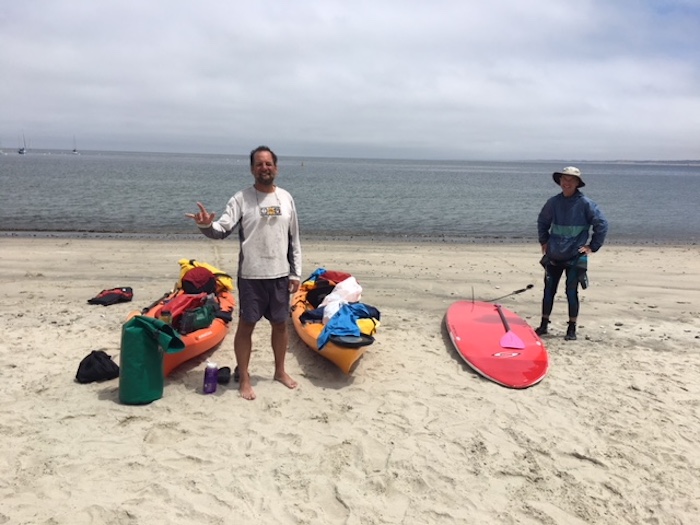
These organizations are linking up with local Monterey Bay business, Kayak Connection, on Saturday, September 17th for the 27th Annual California Coastal Cleanup Day. Last year, over 82,500 people participated in this day’s clean-up efforts statewide and helped remove over 1.2 million pounds of debris from beaches and waterways. Kayak Connection will be providing stand-up paddleboards for volunteers to clean up the shoreline from Natural Bridges to the Santa Cruz Harbor. Another group will be on-site in the Elkhorn Slough in kayaks, helping remove debris there.
Volunteers are welcome to join in this venture. You can register with SaveourShores.org here: http://www.saveourshores.org/what-we-do/accd.php <http://www.saveourshores.org/what-we-do/accd.php> . Or visit this webpage to “adopt a beach” near you http://www.coastal.ca.gov/publiced/aab/aab1.html <http://www.coastal.ca.gov/publiced/aab/aab1.html> .
For more on Coastal Clean-up Day, visit: http://www.coastal.ca.gov/publiced/ccd/ccd.html <http://www.coastal.ca.gov/publiced/ccd/ccd.html>
###END###
Kayak Connection / KayakConnection.com <http://www.kayakconnection.com/>
For 20 years in Santa Cruz & Moss Landing, Kayak Connection has offered sea kayaking and stand-up paddle boarding rental, instruction and tours in Santa Cruz, Moss Landing, Monterey Bay, and worldwide. Both shop locations carry a full line of sea, surf, and sit-on-top kayaks, stand-up paddleboards, paddles, spray skirts and other accessories.
The Clean Oceans’ Project / TheCleanOceansProject.org <http://www.thecleanoceansproject.org/>
The Clean Oceans Project, based out of the Santa Cruz harbor, is involved in bringing attention to the North Pacific gyre and the mountain of trash developing. The organization integrates new and existing technologies to locate plastic marine debris, and is developing effective and environmentally sustainable techniques for removing it from the world’s oceans.
Save Our Shores / SaveOurShores.org <http://www.saveourshores.org/>
For 30 years, Save Our Shores has been an advocate for a clean and thriving Monterey Bay National Marine Sanctuary for all sea life– through ocean awareness, advocacy, and citizen action. They proudly host beach and river cleanups all throughout the year, run the Adopt-a-Beach program, educate youth about our local watersheds in the classroom and in the field, and inform boaters about Clean Boating practices through their DockWalker program.
May/070
From Mild to Wild: A Kayak Adventure’s Guide to the Sanctuary Coast
By Roger Schumann
“Renowned for its world-class scenery, the Nor Cal coast spans three national marine sanctuaries, two wilderness areas and a national seashore. It’s no accident this area has received so much protection—it is among the most spectacular and wildlife-rich marine habitats on the planet.” – Guide to Sea Kayaking Central & Northern California.
Bordering not only our collective backdoor, our local Sanctuary Coast also borders what is essentially the world’s largest wilderness area, the Pacific Ocean. The vast majority of local paddlers are content paddling within the relative safety of wildlife-rich sloughs and harbors like those around Elkhorn Slough, Pt. Reyes, and San Francisco Bay. The promise of remote beaches, hidden coves and sea caves, however, beckons to those willing to develop the paddling skills and sea savvy to venture beyond. Armed with a little knowledge of sheltered launch sites, local wind patterns, tides, and some basic safety skills, you can start stealing glimpses of concealed marine wonderlands that few human eyes have seen.
HOT TOMALES AND THE PT. REYES NATIONAL SEASHORE
“Tomales point jabs its rocky, northwest- pointing finger 14 miles up into the Pa- cific—a giant natural breakwater 500 feet high, forming Tomales Bay, the longest most uninhabited, stretch of protected salt water on this coast.” –from Guide to Sea Kayaking Central & Northern California
For Nor-Cal kayakers, Tomales Bay, fram- ing the landward edge of the Pt. Reyes National Seashore, is definitely a hot spot. In terms of variety, the most diverse sea kayaking in our area can be found along T Bay and the nearby Seashore. My first trip there 15 years ago was also my first overnight kayak-camping trip. Although I’ve logged literally hundreds of nights out since then, leading groups from Glacier Bay to Baja and dozens of places in between, the pull of Tomales keeps drawing me back year after year. This area is well-known for offering the best coastal kayak-camping opportunities in the state for both beginning and intermediate kayakers. Tomales Bay is truly excep- tional, featuring miles of sheltered, largely uninhabited seashore with most of the state’s only coastal boat-in camping beaches.
Novices without kayak rescue skills or their own kayaks can arrange either day tours or overnighters with one of the two outfitters on the bay. Those with more experience, basic knowledge of tides, and the required backcountry permits can rent or launch their own kayaks in the sheltered southwest corner of the bay around Inverness. At low tide the launch beaches turn into mudflats, so timing is crucial. Two of the most popular and accessible campsites are within a two hour paddle: Marshall Beach (three to four miles, depend- ing where you launch) and Tomales Beach (a mile north of that). Both campsites have outhouses, but are otherwise undeveloped.
There are more campsites, every mile or two until the point. These sites require both backcountry permits and some sort of toilet system; because there are no outhouses and the park requires campers to pack out everything. (Most kayakers use WAG bags, a personal poop-in-a-bag system for waste disposal, approved by the National Parks Service). In addition to permits and poo bags, paddlers here also need a lot more sea sense, because the further northern reaches of the bay become increasingly exposed to the open sea, afternoon winds, and treacherous tidal currents. During strong ebb (outgoing) tides, boaters in this area have been swept out to sea, into large surf and have drowned; stay away from the mouth unless you know what you’re doing. The safest time for intermedi- ate, open-water paddlers to try a little taste of what lies beyond the mouth, is to paddle the mile or two out to Tomales Point during flood tide before the wind comes up. A protected launch site at Lawsons Landing, just inside the bay, gives the best access for day trips.
For experienced class IV and V ocean paddlers, the mouth is where things really start to get interesting. Around the tip of Tomales Pt. and south toward Bird Island the full unrestrained glory of the open Pacific is exposed; rocky headlands, exploding waves, rugged cliffs, and rock gardens stretch through the sea mist to the horizon. This area is an advanced paddlers’ playground. Paddlers here should always wear a helmet and need to have the proper experience. Before venturing to this area make sure you have rough-water paddling and rescue skills, previous surf zone and rock garden experience, and probably even a combat roll. Steer well clear of Bird Island if landing on the beach nearby (one of the only landable beaches for miles in this open-ocean cliff-fest), so you don’t flush the harbor seals or cormorants resting there. Also, remember to watch the winds. It is common for the winds to build up to 15 to 25 knots in your face on the return trip.
Paddling north from the mouth is a three mile stretch of exposed, sandy beach for surfing, followed by cliffs and more rock garden play spots all the way to Bodega Bay, eight miles or so.
In general the area around the mouth is as dynamic as any on this coast. Within a few minutes a change in tide and rise in wind can change things from a simple class II jaunt into a serious class IV+ free-for-all. And then, of course, there are the sharks. Nothing puts the wild in wilderness, it’s been said, like the presence of some large, toothy predator, and the reminder that in this neighborhood you have slipped down a link from your normal place at the top of the food chain.
For tamer trips along the Seashore, paddlers can also try Drakes Estero. Like Tomales Bay, make sure to avoid low tide mudflats, dangerous ebb currents and the surf at the mouth – unless you like that sort of thing and are prepared for it. The waves here tend to be much smaller and more manage- able for intermediate kayakers, and they break onto sand, not rock. Note that after- noon winds blow from the launch beach, so getting back can be a five-mile slog if you haven’t checked your marine weather radio.
From Drakes Estero, Class III ocean paddlers can drive (or paddle) a few miles further out the road toward Point Reyes lighthouse to Drakes Beach for a sandy, semi-protected surf launch. From there you can paddle about five miles along white, sandstone cliffs (with a variety of landing beaches) all the way to the towering Pt. Reyes headlands. Once around Chimney Rock you are back into serious seas, where three miles of 300 foot granite seawall marks the dramatic geologic statement of Pt. Reyes.
MENDOCINO: SEA CAVES AND ARCHES AND COVES, OH MY!
Although the craggy Mendocino coast is among the more scenic shorelines in a state famous for its beautiful shores, what puts Mendo on the map as one of the planet’s premier paddling destinations is the numWhile Mendocino has some wonderful options for novice paddlers, they are mostly limited to trips up the Big, Albion and Navarro Rivers, winding in solitude among the tall trees of second-growth redwood and Douglas fir forests. Adventurous paddlers turn their bows toward one of the most rug- ged, wave-sculpted coastlines on the planet – a 20-mile long fluke of geology literally Swiss-cheesed with sea caves. The safest and easiest launch site to access a cave here is from Van Damme State Beach. One local company offers short guided tours on sit- on-top kayaks into a few of Van Damme’s more accessible caves. When the sea is being cooperative, intermediate paddlers can seek the company of experienced sea cavers to explore many more of the caves in this area.
The more skills and experience you have, the more terrain you’ll be able to explore. On a typical day, it is semi-protected from Van Damme south to as far as Buckhorn Cove (about three miles). This area previews some excellent examples of what the area has to offer. Beyond Buckhorn Cove the exposure increases exponentially–the caves tend to be bigger and more dynamic. If the northwest winds come up, you may be committed to the seven-mile, one-way trip down to Albion, the next possible take out. Other than that, this area is filled with cliffs, caves and more caves. There are the occasional pocket beaches to stop on for lunch, but that is about it.
This dearth of beaches and distance between landing sites can make mistakes costly. An acquaintance of mine lost almost a foot off the stern of her fiberglass kayak when a large wave washed her into the cliffs – she was fortunate not to lose more. Others have been injured and worse. A sudden wave can turn a peaceful, dreamy cave into a nightmare in the blink of an eye, so getting proper instruction before playing in caves is essential. Classes in surf zone and rock garden paddling are the mini- mum. But for those willing to put in the time to learn, this place can be pure magic. Inter- mediates can also poke around the scenic, pro- tected coves at Albion and Russian Gulch, but to access the caves and coastline beyond, they should only go with experienced sea cavers.
MONTEREY BAY
“Spanning one-fifth of the California coast, the Monterey Bay National Marine Sanctuary is the crown jewel of the sanctuary program. Among the most productive marine habitats on Earth, it offers unparalleled opportunity for marine research and a wildlife-rich envi- ronment for paddling.” From Guide to Sea Kayaking Central & Northern California.
Next to Pt. Reyes, the Monterey Bay area offers the most diverse paddling in the region. Beyond the popular, wildlife- rich wonders and kayak rental operations at Elkhorn Slough and Cannery Row, are lesser-know jewels like Stillwater Cove (north of Carmel at the south end of the world- famous 17 Mile Drive). This south-facing cove is aptly named as it is sheltered from all but the largest of swells. The launch site is almost always suitable for beginners. The cove is less than a mile wide, but is still worth poking around. Outside the cove, intermedi- ate paddlers with surf zone skills can head down to Carmel Beach. Advanced paddlers can explore along the cliffs and rock gardens to the north along 17 Mile Drive, or south past Carmel, to Pt. Lobos Marine Reserve.
Launch sites closer to Pt. Lobos (at the infa- mous, Monastery Beach or inside the Reserve – reservations required) give the best access to some of the finest advanced, open-coast paddling and the most scenic seascapes in the state. This area marks the beginning of the Big Sur coast and offers dynamic views of windswept cypress trees clinging atop rugged, wave-sculpted, granite cliffs. Around Pt. Lobos on a clear day, the Pt. Sur Light flashes an invitation to adventure, alluring as any Siren’s song. The three-day, open-coast journey down to Big Sur, sharing all the cliffed-out exposure of a big wall climb, however is another story entirely, and is best saved for another day.
Roger Schumann, author of the award-winning Guide to Sea Kayaking Central & Northern California and Sea Kayak Rescue, and owner of Eskape Sea Kayaking in Santa Cruz, has specialized in skills instruction for coastal kayak touring for the past 15 years.
Jan/040
SCUBA DIVING FOR NEANDERTHALS
by Christa Fraser
We were all perfect divers in the womb, our dive instructor, H, told us on our first night of scuba diving class. This made sense. We did once live in an amphibious state in the womb. Then he went on to tell us that
because we were learning to dive in Monterey Bay, which some consider to be the Mt. Everest of scuba diving, we would be reborn as dive Sherpas by the time we passed the class. Let’s just say I wasn’t reborn as Tenzing Norgay.
Learning to scuba dive isn’t just about becoming friendly with your air tank and schlepping 60 pounds of gear, it is mostly about training and using your brain. We were constantly reminded to bring our brains below the surface, like any piece of good equipment. The problem was determining which brain to bring—the modern, evolved one which allows you to rationalize sucking oxygen from a tube while swimming with the fish, or the primitive one which tells you to get the hell out of there so you can breathe. It really was a tough decision.
The Higher Mind
Modern brains differ greatly from those of our ancient ancestors like Homo Erectus. We are able to compute, think in the abstract and create technology. It isn’t hard to see that diving is a result of the modern brain. We had to develop the equipment that allows us to submerge ourselves for long periods of time and learn how to compute safe dive times and depths. Most importantly, we had to be able to imagine ourselves breathing underwater. There is a reason that early Homo Erectus didn’t dive—he wanted to survive. Fortunately, the first part of learning to dive appeals to our modern brain. Otherwise, my inner Neanderthal would have hightailed it out of there pretty quickly.
Our PADI certified dive class, held at Aquarius Dive Shop in Monterey, started inauspiciously. In fact, I felt a little elation that what I thought was going to be a three hour class turned into a one hour introduction before we were excused. I felt like we were given leave to play hooky and it was only the first night of class. This is going to be easy, I thought.
“Finish your PADI Go Dive book and watch all the videos by the next class. Oh, and have all of the Knowledge Reviews and quizzes complete, too,” H told us. No problem.

After watching some really groovy PADI dive videos from the eighties (there is a reason we don’t wear neon green, pink and purple simultaneously anymore) I became really psyched. My boyfriend, Matt, sat on the couch watching the videos next to me. By the time the first video finished teaching about lung bursts and alternative air supplies, I was proudly rattling off the different pressure, volume and density ratios. Matt stared at me skeptically and asked, “Are you sure you can do all that?
”Oh, come on. I always ace tests,” I said. He looked back at the screen, where divers were now perfectly performing a buoyancy test in a pool.
“OK,” he said, but he looked worried.
I have always done well in school.That said—I usually had one of the lowest quiz scores in the dive class. I knew that I was in over my head before we ever got in the water, and then a young skin diver/ lifeguard
named James informed us that it was our medulla oblongata that governed our primitive functions, like breathing and heart beat. Um, how do you spell that? Well, I was sure that my medulla big olgoba wasn’t going to be in charge of my diving. I knew that my intellect would be in control.
H went on to tell us about the Zen of Scuba and how we would learn to control our breath, slow down our respiratory system, learn to meditate without actually meditating. He explained that we would learn to fly underwater.
Then we hit the pool.
The Primitive Mind (Located in the Hind Brain)
Some of the guys who were our dive masters were very big, muscled men who whispered things about being in the Special Forces and such. I suspected that they were operating out of that very lower section of brain which sits above the spine and acts like a bunch of twitching electrical fibers and drinks a lot of beer. Actually the instructors were great. I was the one who was reduced to operating from those twitching bundles as soon as I stepped into the swimming pool of the Monterey Travel Lodge where we would do our first dive simulations.
Gary, a big guy who was once in special ops, was assigned to instructme specifically, because…let’s just say that I had special needs.
There is something about donning a seven mil wetsuit and a seven mil vest that can make even a spelunker feel a bit constricted. Then you put on a buoyancy control vest, a 20-something pound weight belt, a neoprene hood,
booties, and to top it off fins, thick gloves, a mask, and a snorkel. You put this mouthpiece in your teeth and start breathing from the tank that you have strapped to your back and jump in the pool. It does not feel natural.
My mind panicked a bit (I should admit that I lost a contact during the swimming test, so my first experience scuba diving happened while I was virtually blind). Everyone else was calmly following instructions and doing their exercises. It took me four tries to clear my mask of water and then another four tries to take my mask off completely and replace it without schlurping up a bunch of pool water. But by the end of class, after following Gary around for a couple of hours, I had relaxed quite a bit and was becoming exhilarated by the sensation of breathing underwater.
The next week in the pool, I felt relaxed and excited. Jim, a sweet old salt and dive demon, instructed me and a student named Colleen, who probably weighed less than all of her gear put together. I felt like my higher brain had won the battle. I would be super stud under water when we went into the actual ocean.

The Really Primitive Mind
Hyperventilation is a response by the medulla oblongata to distress. My ability to rationalize using up three-fourths of my air supply before I even got my forehead wet, however shows that my thinking brain was still working,
at least on the surface.
My dive buddy, Monica, and our dive instructor, Lance seemed like my personal buoys at times. The visibility was reduced to several feet and so the three of us were holding hands or touching at all times. In fact, one of the clearest things I saw on all four of those dives were Monica’s eyes, big and brown and keeping me rational.
We had to do four check-out dives in the ocean over a two day period. I used an hour’s worth of air just swimming out to the buoy. On the very first dive, we had to take off our masks and replace them underwater. At one point I tried to surface without finishing the exercise. My mind saw the undulating light of day straight above (about 15 feet) and I kicked off the bottom and headed straight up. H tugged on my leg, and brought me back to my rational mind. I calmly replaced my mask, cleared it and then got the thumbs up from him. Apparently, I had brought the wrong brain with me on that first dive.
I cleared all of my skills. Although getting my weight belt back on over the bigger tank they gave me the second day was not pretty. Thankfully, Lance kept a hold on it so it didn’t sink. Finally, on the fourth dive, we were allowed to do a fun dive, although we had to do it by compass. It really was amazing to be skimming the ocean floor and checking out the starfish, sea cucumbers and sandabs while breathing underwater. I felt very safe and reassured by my dive partners. We navigated perfectly, and I had barely used up any air! By the time we hit the beach, we were excited to dive again.
I didn’t magically morph into a superhero diver in just three weeks. In fact, if Wonder Woman looked as bad as I did in 14 millimeters of neoprene, she would have been fired. What I did learn, though, was that
I could understand a lot of technical stuff, get my gear set up and keep myself calm enough underwater to discover a whole new world. I didn’t quite get to the Zen of Scuba, but at least I learned to stop hyperventilating. My medulla oblongata is such an air hog.