
Jul/090
Fact or Fiction?

Busting the 10 Most Common Eco Myths
By Will Harlan and Graham Averill
You’ve heard these myths before. Your uncle likes to repeat them at the dinner table, corporations tout them on TV ads, and politicians spew them during stump speeches. They’ve been used over and over to justify poor environmental policy, and they’re just plain wrong. Here are the top ten most dangerous eco myths.
1. Clean coal technology will solve our energy problems.
The coal industry has spent millions marketing their new “clean coal” technologies to the public. In 2008, the American Coalition for Clean Coal Technology spent $40 million on TV and radio ads, and $1.7 million went to street teams who handed out clean coal schwag at the Democratic and Republican conventions. More troublesome, every politician from Obama to John Boehner tout clean coal as a viable workhorse for our energy needs.
Yet the truth is this: clean coal does not exist. According to MIT, the leader in clean coal technology research, the first coal plant able to capture its carbon emissions won’t come online until 2030 at the earliest, which makes carbon capture and sequestration a theoretical possibility at best.
But here’s the real kicker: clean coal isn’t even clean. Even if coal plants were able to capture its carbon emissions, turn them into liquid form, and inject them into the ground or ocean (which presents its own environmental pitfalls), we still would end up with even more polluted skies and waters. That’s because carbon is just one of over 100 toxic pollutants emitted from burning coal, including mercury, smog-forming nitrous-oxides, and particulate matter, which are responsible for higher rates of birth defects, asthma-related illnesses, and heart and lung diseases. Carbon capture does nothing to mitigate these other pollutants. But it does increase the amount of mountaintop-removal mining, sludge ponds, buried streams, coal ash dams, and other toxic legacies—hardly deserving of the word clean.
2. The U.S. shouldn’t cap carbon emissions until China addresses the issue.
There is no doubt that China’s carbon footprint is huge. In the last four decades, China’s carbon footprint has quadrupled, and recently, China became the world’s greatest emitter of carbon dioxide, just surpassing the U.S. But when you consider the population difference, the massive Asian country doesn’t even come close to our level of emissions. There are one billion people in China, emitting essentially the same amount of carbon dioxide as the 300 million people in the U.S., and we’ve been leading the CO2 emissions for over 100 years.
A new study by the National Center for Atmospheric Research indicates there is no way to avoid warming during the 21st century, but reductions of greenhouse gas emissions by 70% could stabilize the most drastic negative affects of that warming.
It is no longer an option to wait for China to address global warming if the world as a whole is going to hit the estimated global CO2 stabilization targets and avoid the worst impacts. As the largest piece of the emissions pie, and as the wealthiest and most technologically advanced country in the world, the U.S. has to lead the way in reducing emissions. We already have the technology to do so: a study by the international auditing agency McKinsey and Company found that if the U.S. just adopted stricter energy efficiency codes in its buildings and appliances, we could reach one third of our greenhouse gas reductions target.
3. Alternative energy is too expensive and coal is cheap.
Even if you set aside the environmental and public health costs of coal-fired power (how much are healthy lungs worth, anyway?), solar and wind are cheaper than coal when all of the government subsidies for coal are removed. Coal power claims to deliver power at $2 per kilowatt, but that price includes billions of federal funding. The only so-called clean coal power plant in the works—an experimental station called FutureGen in Illinois—is already pricing out at $6 per kilowatt, and that does not even include the cost of extracting and transporting the coal. A coal plant lasts only 20 years before it must be upgraded, and the coal must constantly be mined and transported.
Meanwhile, right now most solar can deliver solar power to the company for roughly $3 per kilowatt. And that energy continues indefinitely into the future, with no cost of mining or transport.
And renewable energy becomes cheaper with every new solar panel or wind turbine installed, while coal prices—because it’s a finite source—will only continue to climb higher. And this coal is actually going to cost you, the taxpayer and rate payer, a fortune: The Department of Energy just spent $2.4 billion for clean coal projects in its 2009 budget request, the largest increase in public funding for coal research in 25 years. While the government is subsidizing the research of clean coal, a new study by the University of Massachusetts shows that investing in clean energy creates three to four times more jobs than investing the same amount of money in the coal industry.
4. The population boom in third world countries threatens our resource supply. Someone make those poor people stop having babies!
Global population is a serious concern. There are an estimated 6.7 billion people in the world right now and U.N. projections put global population at 9.2 billion by 2050. Whether earth can sustain 9 billion people is at best debatable, and the rapid growth in developing countries is troubling.
But the scariest statistics hit closer to home. The United States is growing at a faster rate than almost every other developed country in the world. Our population has doubled in the last 60 years, and we’re expected to grow to add another 100 million Americans by 2050.
A hundred million more people doesn’t seem like a lot when India is expected to grow by 500 million, but we’re talking about 100 million more Americans, who already consume a quarter of the world’s natural resources. The average American uses four trees worth of paper products per year, twice as much as the average European. We’re worried about India’s population boom, too, but Americans consume 35 times more resources than the average Indian.
Our resource consumption is already taking a toll on our planet right below our feet. Half of our population currently relies on ground water for drinking water. Ground water tables have dropped hundreds of feet in western states, and Florida’s freshwater table has been so drastically depleted that saltwater intrusion is becoming a serious concern. In California and elsewhere in the West, the diminishing groundwater reserves are compounded by shriveled reservoirs and reduced average snowpacks in the Sierra and other ranges.
5. Green power can’t meet U.S. energy needs.
Eight hundred gigawatts. That’s how much power America uses. And to suggest that alternative energy sources like wind and solar can’t provide that amount of energy is simply wrong. Jon Wellinghoff, the head of the Federal Energy Regulatory Commission, recently told Congress that the U.S. may never need to build a new nuclear or coal-fired power plant again because renewable energy and improved efficiency can meet America’s future energy needs. He cited the 500-700 gigawatts of wind in the Midwest and ample solar potential in the Southwest.
Interior Secretary Ken Salazar recently said wind energy replacing coal is “a very real possibility.” The world’s largest wind farm, Titan Wind Project in South Dakota, will have 2,000 turbines producing 5,050 megawatts, enough to power every home in South Dakota and North Dakota. In 2008 alone, there was a 50% increase in the installed wind capacity in this country, with more projects scheduled to come online in 2009 and 2010.
As for solar, it alone could supply 90% of our energy needs, according to the Department of Energy’s own data. Every state in the union is an ideal candidate for solar power. The 800 gigawatts that America needs translates to 17 square miles of photovoltaic panels per state. It sounds like a sizeable amount of real estate, but there’s a movement afoot to build these solar centers in industrial brownfields. There are five million acres of abandoned industrial sites throughout the country. Many of them are situated near large population zones, which would eliminate the need to build extensive electric grids.
6. The Prius has a bigger carbon footprint than a Hummer.
This popular myth is based on a study that claimed the Hummer was actually greener than the Prius and other hybrids because it had less of a carbon footprint over the entire lifecycle. The study was cited by a number of journalists, bloggers, and hybrid-haters. It even made it onto an episode of Boston Legal.
The trouble with this scientific study was that it wasn’t scientific at all. An independent group, the Pacific Institute, did a thorough analysis of the study in 2007 and discovered several troubling factors: The study was produced by a marketing firm for the auto industry and funded by that same auto industry, and data was manipulated in order to create the desired outcome.
No peer review was conducted on the survey either, which enabled the authors to make numerous false assertions and assumptions. For example, the Hummer was given a life cycle of 35 years and 379,000 miles, whereas the Prius was given a lifecycle of only 12 years and 109,000 miles.
7. CFL’s contain too much mercury to be green.
Yes, there is a small amount of mercury in a CFL, so if you break one, don’t lick up the mess. But no, you don’t have to call an EPA cleanup crew to dispose of a broken CFL.
The mercury content in a CFL is about 5 milligrams. The mercury content in traditional thermometers is 500 milligrams. Since your home is likely powered by a coal-fired power plant, which emits an average of 50 tons of mercury every year and is the largest source of mercury poisoning in your community, switching your light bulbs to CFLs will significantly reduce the amount of mercury that’s in your ecosystem.
How? Because CFLs use 10 times less energy than a traditional light bulb, and less energy used means less mercury emitted from that coal-fired power plant down the road.
8. Temperatures were hotter in the Middle Ages than now.
Flat out false. Temperatures have indeed fluctuated over the centuries, but the 20th Century was the hottest on record. According to the National Oceanic Atmospheric Administration, there was a “warm period” between the 9th and 13th centuries when temperatures were warmer than the following 15th to 19th centuries. However, the temperatures during this Middle Age “warm period” weren’t as high as the temperatures we’re experiencing now in the late 20th and early 21st centuries.
In fact, we’re now living in the warmest period the earth has seen in at least the last 1,200 years. And based on all projection models, it’s only going to get hotter. According to the Intergovernmental Panel on Climate Change, depending on how well we curb greenhouse gas emissions, the average global temperature will rise anywhere from 3.6 degrees Fahrenheit to 6 degrees Fahrenheit.
9. Cows pollute more than cars.
Cows do emit a good bit of greenhouse gases in the form of methane. Agriculture is responsible for 14 percent of the world’s greenhouse gas emissions, and a sizable portion of those emissions come from the 1.5 billion cows currently grazing across the globe. The average cow emits anywhere from 26 to 130 gallons of methane gas a day through flatulence and belching. That’s roughly the same amount of pollution the average car emits in a day.
However, the assumption that this methane production from cows is perfectly natural is false. Back in the day, cows munched on native grasses and flowers, which were high in nutrients and easy to digest. When agribusiness agriculture took over, they switched the feedstock from natural grasses to cheap ryegrass, which has almost no nutrient value and inhibits digestion in cows, resulting in much greater methane emissions than normal.
So, much of the methane emissions from cows actually is manmade. The solution? Smaller, organic cattle farms have returned to the native grass feed, and some industrious farmers in New Zealand are capturing the methane from cow poop and using it to power their farms.
10. Going green is too expensive.
Going green is actually the smartest way you can save money right now. The golden rules of the “green lifestyle” are reuse and reduce, a message that often gets lost in the eco-chic hysteria of our consumer culture.
You really want to reduce your carbon footprint and live green? Buy a smaller house, a smaller car (or no car), and less plastic crap. Organic vegetables are tasty, so why not grow your own? Watch less TV and only turn on one light in your house at a time and you’ll save a fortune on your energy bill. Ride the bus—it’s cheaper than a tank of gas. Buy used gear. Get your clothes from a consignment store. Yes, that soy-based paint is more expensive than latex, but the cheapest and greenest paint, is the paint you don’t buy.
There’s a difference in living green and buying green, so you have to ask: Are you going green to make a difference, or are you going green so you can get the newest, shiniest stuff?
This story originally appeared in Blue Ridge Outdoors magazine, part of the Outdoor Adventure Media network of regional outdoor publications that includes Adventure Sports Journal.
Jul/080
High-Tech Hopes
Three Eco-Innovations that Could Save the World
By Graham Averill
In the midst of all false hype—and hope—surrounding corn ethanol and fuel cells, these three lesser-known innovations are gaining attention and research funding. Together, they represent some of the brightest opportunities for a green infrastructure, from the food we eat to the energy that powers our homes.
Nanosolar Panels
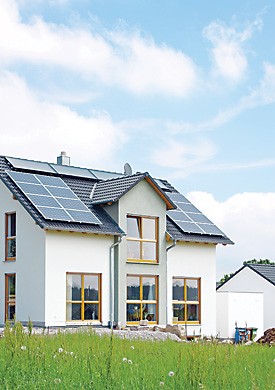
The trouble with solar right now is that it’s still too expensive. But not for long. The San Jose-based solar company Nanosolar has developed a low-cost, printable solar cell manufacturing process. Instead of the traditional solar panel, the Nanosolar product is a thin layer of photovoltaic film that converts light into energy. Powersheet solar cells cost one-tenth of conventional solar panels, can be produced at a much faster rate, and have proven to be just as efficient.
Traditional solar panels require silicon, which is increasingly rare, expensive to ship, build, and install. The silicon also has to be applied to glass, which exacerbates the shipping and installation woes. The cheapest conventional solar panels cost $3 a watt to produce. Nanosolar’s Powersheets cost only 30 cents a watt to produce, and are being marketed to the consumer at 90 cents a watt.
The company’s new production facility will churn out 430 megawatts of panels a year, more than all other U.S. solar plants combined. The first 100,000 panels are going to Europe for a 1.4-megawatt power plant. The company couldn’t have picked a better time to produce its technology: 2007 was the first full year for California’s Million Solar Roofs Initiative, which offers tax rebates for 100,000 solar roofs per year, every year, for ten years.
Test Tube Meat
In-vitro meat, (also known a laboratory-grown meat or cultured meat) is flesh that has never been part of a living animal. Scientists mix stem cells from a living or dead animal into a nutrient-heavy mixture. When the mixture is placed in a bioreactor, eventually those stem cells turn into muscle fibers. NASA has been working on in-vitro meat since 2000, but a growing number of scientists are pursuing a commercially viable form of test tube meat to help supply the world’s growing appetite for all things fleshy. People for the Ethical Treatment of Animals (PETA) has even offered a $1 million award for anyone who can develop commercially viable (and tasty) in-vitro meat by 2012.
Global demand for meat has doubled in the last 40 years and is expected to double again in the next 40 years. Meanwhile, Americans eat twice as much meat as the average earthling. All this beef consumption is an environmental nightmare. Thirty percent of the planet’s land is devoted to livestock production, a process that is responsible for a fifth of the world’s greenhouse gases—more than all of the world’s transportation infrastructure.
But greenhouse gas emissions are just the tip of the melting iceberg. 800 million people suffer from malnutrition on this planet, but 70% of all corn and soy we grow is fed to farm animals. The agriculture responsible for that corn and soy consumes half of all freshwater and contributes to three quarters of all our water pollution.
But don’t get too excited about in-vitro meat just yet. Right now, it would cost $1 million to produce a 250g piece of beef. It will likely be 20 years before we see a commercially viable in-vitro steak. The real question is: Will 20 years be enough time for Americans to get used to the idea of eating ribeye grown in a lab?
Feces Energy
Human excrement could hold the key to energy independence—at least for developing nations.
Sintex, an India-based plastics company, is investing in at-home biogas digesters to help solve India’s two greatest problems: a growing need for energy, and a desperate need to dispose of human waste. The small plastic domes turn human excrement and cow dung into fuel. Inside the plastic domes, bacteria breaks down the waste into sludge. Methane gas is captured and then used to provide gas for cooking and electricity. Household digesters in India will run about $425 and would provide enough gas for a family of four to cook all its meals while providing a byproduct that can be used as fertilizer.
It’s not likely that biodigesters will catch on in the U.S., where sanitation is paramount. However, larger models have been successfully employed to accommodate entire villages in India. And in Rwanda, overcrowded prisons are powered by feces digesters.
Several Western firms are developing similar technology that would turn hog excrement into biofuels. Untreated livestock manure poses a serious environmental threat to ground and surface water, and contributes to global warming through the release of methane gas. Belgium has installed a large methane digester on a major hog farm and six other systems are on order for farms across Europe. The U.S. could be next.
—Article courtesy of Blue Ridge Outdoors
Jul/080
Deeper Shade of Green
Top Five Ways to Take Green Living to the Next Level
By Graham Averill
Okay, you’ve changed all your light bulbs to CFL’s. Excellent. Now you’re curious about what you can do to color your eco-conscious lifestyle with an even deeper shade of green. Here are five tips guaranteed to make the most dramatic reduction on your carbon footprint. They require more drastic lifestyle changes than replacing your shampoo with organic botanicals, but given the alarming state of our environment, perhaps it’s time for something more drastic.
1) Eat Vegetarian: One of the most significant drains on our natural resources and contributors to global warming? Meat. The United Nations recently listed raising animals for food as “one of the top two or three most significant contributions to the most serious environmental problems at every scale, from local to global.” Growing animals for food is one of the most resource-intensive practices on the planet. Half of the fresh water consumed in America is used for livestock. Eighty percent of the agricultural land in the U.S. is used to raise animals and 70% of the grains and cereals we grow goes directly to feed farm raised animals, a process that is energy intensive. In fact, a third of all fossil fuels produced in the U.S. are used to raise livestock–which produce 130 times as much excrement as the entire U.S. population, excrement that ends up polluting our ground and surface water because a lack of regulations. The negative impact from the livestock industry is colossal, from the water we drink to the energy we consume to the 840 million starving people on this planet.
2) Eat Local: You’ve heard it before, but we’re going to say it again. On average, each ingredient on your plate traveled 1,500 miles from the farm to your belly. Eat a salad with the typical produce sold in most grocery stores, and that meal is responsible for possibly tens of thousands of petroleum sucking food miles. The solution? Cut back on products that are shipped from far corners of the world and concentrate on eating local fare grown within 100 miles of your home. Of course, the best and most local option of all is your own backyard. Plant a garden and enjoy the freshest, healthiest, and most eco-friendly fruits and veggies in town.
3) Recycle and Compost: Shockingly, only 33% of Americans recycle, which means those Earth Day specials starring Alan Alda during the ‘90s didn’t have a lasting affect on the population as a whole. We know in our gut that BRO readers already recycle their PBR empties, but what about composting? The average American produces 4.4-pounds of garbage a day–half of which is made up of organic material like food scraps, paper, and yard waste. Those same organic materials can be composted in inexpensive plastic bins, turning them into carbon-rich fertilizer for your garden. Between recycling and composting, you could feasibly cut your landfill production by 75%.
4) Walk: It’s the most simple thing you can do to reduce your carbon footprint, and yet it’s the last resort for most of us. Americans drive 12,000 miles a year on average, but 15% of all trips in the U.S. are less than a mile long. If we all substituted one short car trip a day with a walking trip, we’d save 8.4 billion gallons of gas and 8.2 billion tons of carbon emissions every year. If you can manage to drive ten fewer miles each week, you’d cut your personal carbon emissions by 500 pounds a year. Inventory the trips you make in your car and decide which ones could feasibly be substituted with a walk or bike ride. Develop a walking schedule and stick to it.
5) Consume Less: This could be the toughest habit to break. We are a species and a society that is obsessed with stuff. By the time we buy the iPod, we’re already saving for the newer, better version. “Reduce” is the first item in the old environmentalist’s mantra “reduce, reuse, recycle.” Yet America has more shopping malls than high schools. When the terrorists attacked, our president asked us to show solidarity by shopping. The average American consumes twice as much as we did 50 years ago and we spend 3-4 times as many hours shopping as Europeans. If everyone in the world consumed at U.S. rates, we would need five planets to house our goods and trash. Consuming less would have an overwhelming affect on the amount of goods produced, the amount of energy and petroleum used to produce those goods, and the amount of goods that end up in our landfills. www.storyofstuff.com.
Five More
These eco-suggestions may not have as big of an impact on global warming than the five solutions listed above, but you have to admire the innovation and level of commitment involved in each.
1) Eat Trash: A growing number of people have taken to rummaging through the garbage for food and other products in an attempt to minimize their impact on the environment. Dumpsters behind grocery stores are a hotbed of Freegan activity, as the stores are forced to throw away bread, canned goods, eggs, cereal, fruit…well before the food has expired. www.freegan.info.
2) Hitchhike: Are we really recommending you get into a car with a stranger? Not exactly. We’re suggesting you get into a car with strangers who share similar interests with you. Goloco.com is a social networking site for people looking to cut their gas consumption down by carpooling. Create a personal profile and find other commuters in your town who are religious fanatics, Obama supporters, or metal heads. www.goloco.com.
3) Vote for the Environment: The environment has gotten cursory lip service in previous elections, only to have the thunder stolen by topics like the economy and international affairs. This year, more than ever, remember that the environment directly affects big ticket items like the economy and the international relations. Log on to the League of Conservation Voters to see what environmental legislation is currently being debated in Congress as well as how Green your representatives have voted in the past. www.lcv.org.
4) Ditch the Catalogs: Twenty billion catalogs are distributed world wide every year, most of which are unsolicited. You probably get two or three random catalogs a week, which you either recycle or throw in the trash. Very few of those catalogs contain recycled paper. In fact, eight million tons of trees are cut down specifically to produce those unwanted catalogs. Check out Catalogcutdown.org for a service that will take you off the catalog mailing list (think: No Call Registry for junk mail). www.catalogcutdown.org.
5) Save the Bees, Save the World: One third of the fruits and vegetables we eat depend on honeybee pollination to thrive. It’s a disturbing figure when you consider 70% of the managed bee population in the U.S. has disappeared over the last decade. It’s called Bee Colony Collapse Disorder, and scientists aren’t exactly sure what’s causing it. A virus? Pesticides? Global warming? It’s anyone’s guess. You can help fight it by supporting honeybee research, buying pesticide free organic produce, and planting a native plant and wildflower garden. www.nappc.org.
—Article courtesy of Blue Ridge Outdoors
Jul/070
Sweating It
How will global warming affect outdoor recreation?
By Graham Averill
You want a bleak picture of the world ravaged by global warming? Forget “An Inconvenient Truth.” Watch “Soylent Green,” the ‘70s sci-fi thriller starring Charlton Heston that depicts a 2022 New York City ravaged by global warming. Al Gore may have melting ice caps, but Charlton Heston has us eating people in the form of green protein bars.
“Soylent Green” may be fiction, but people eating each other and watching a lot of TV seems like a frighteningly realistic possibility of a planet ravaged by climate change. When the world gets hotter and our ecosystem dies because the atmosphere is so inhospitable, most Americans will just stay inside more. We’ll watch a lot of reality programs. Our baseball games will all be played inside domes. We’ll eat genetically engineered food and life will go on in our climate-controlled, air-purified futuristic bubbles. Most of the population will continue on with business as usual. Golf will go digital, video gamers won’t even notice a difference, but what about the rest of us? What about the less sedentary contingent of the American public that need to get outside and play? How will climate change affect the world of outdoor recreation? What’s going to happen to our favorite hikes when the average temperature is 112? Will there still be rivers to kayak? Will we all be skiing in artificial domes in 50 years? Forget population control and green power bars made of people, what does the future of outdoor sports look like in a world ravaged by climate change?
As it turns out, the future for outdoor adventure is almost as bleak as “Soylent Green.” From surfers to snowboarders, we can all expect some changes to our favorite outdoor pastimes in the very near future. Some of those changes have already begun.
“We’re just now starting to see the beginning affects of global warming in certain places like the Arctic and out West,” says Virginia Kramer with the Sierra Club. “You can look at the declining snow pack out West and the wildfires and the drying of the wetlands to get a picture of what it’s going to be like for the rest of the country in the future.”
Right Now
Nineteen of the 20 hottest years in recorded history have occurred since 1980. The 10 hottest years on record have occurred since 1990. In mid-June, the largest forest fire in Georgia’s history was still burning in the Okefenokee National Wildlife Refuge. Of 401,000 acres within the refuge, close to 329,000 acres had burned – and these are “swamp” lands.
Perhaps more dramatic is what’s been happening in the mountains of the West. In Montana, Glacier National Park has only 27 glaciers today. In 1850, they had 150.
In California, scientists say high-elevation ecosystems such as the Sierra show some of the clearest signals of climate change. Glaciers in the range have shrunk up to 78 percent.
Winter temperatures in the Tahoe Basin have risen about 2-3 degrees from historical norms, and the lake itself has been warming at all depths. Up and down the range, peak spring snowmelt now occurs on average two to three weeks sooner than it did before 1950. This spring, of course, it was about 4-6 weeks sooner and there wasn’t much to melt in the first place.
Scientists project California and the West will continue to warm faster than the East. By the end of the century, computer climate models predict California could be as much as 8 degrees warmer. Even the most conservative projections estimate a 3- to 4-degree warming.
According to the National Oceanic and Atmospheric Association, there is absolutely no debate whether or not human activity is increasing the concentration of greenhouse gases in the atmosphere.
“The most authoritative voice on the matter, the International Panel on Climate Change, has come out and said we’re already seeing the affects of global warming,” says Julie Bovey with the National Resource Defense Coalition. “Weather is cyclical and some things can be attributed to smaller fluctuations in weather patterns, but when you start seeing a pattern of changes earlier and earlier,
you can attribute that to a larger issue.”
No Snow
The current weather patterns have gotten many people worried about the viability of outdoor sports 50 years from now, particularly in the snowsports world. Bovey is working with the National Ski Area Association on the “Keep Winter Cool” campaign, which raises awareness of global warming threats while also encouraging ski resorts to change their own energy practices on the hill.
“The ski industry has a unique understanding of how global warming will affect us,” Bovey says. “Sports like skiing and snowboarding are in real jeopardy.”
Consider the snowsports industry the “canary in the coal mine” for how global warming will affect outdoor sports. Snowsports are hit the earliest and the hardest. A U.N. Environmental Program report released last winter shows many low-altitude ski resorts in Canada and Europe are already facing serious economic challenges. A number of professional races were cancelled or moved during the 2006-2007 season due to a lack of snow. One resort hosting a race resorted to flying the snow in by helicopter. Meanwhile, the glaciers that pros train on throughout the year are getting smaller and smaller. And these could be the last “good” ski seasons ever.
The International Panel on Climate Change (IPCC) report estimates that global temperatures will rise between 2.5 and 10 degrees by 2100. The difference of a few degrees can have a huge impact on the snow season.
This may be truer in the Sierra than any place else because its relatively mild winter temperatures already put it on the precipitation bubble between rain and snow. If average Sierra temperatures rise another 5 or 6 degrees, as some studies predict, the snowpack could be reduced by 89 percent. In fact, just a 3 degree rise could cause the snow line to rise about 1,500 feet. Imagine what that would do to California ski resorts where it already often rains at the base?
“Forget about backcountry snowsports in the future,” Bovey says. “Even the places that rely on making snow will have trouble. You can’t make snow if it’s not cold enough.”
By and large, the ski industry is paying attention, though some are taking a more proactive approach than others. Seventy ski resorts are involved with the “Keep Winter Cool” campaign, with involvement ranging from distributing information about climate change to broadcasting infomercials to transforming their infrastructure to a clean energy model. Aspen is perhaps the most aggressive of the resorts, filling its snowcats with biodiesel, running motion- sensor soda machines and offsetting it’s entire electrical use with wind credits.
In California/Nevada, nine resorts are part of the Keep Winter Cool campaign. Alpine Meadows, Sugar Bowl and Heavenly are among them and also offset 100 percent of their electricity use by buying wind power credits. Northstar-at- Tahoe and Mammoth Mountain also have extensive renewable energy programs.
“We’re not going to defeat global warming, but we can mitigate it,” Bob Roberts, executive director of the California Ski Industry Association, told the San Francisco Chronicle last October, before one of the driest winters on record left a snowpack behind that averaged 29 percent of normal.
In Hot Water
Climate change is not strictly a winter recreationists’ concern. American Whitewater is part of the Stop Global Warming online march on Washington and is currently looking at how climate change will impact the free flowing rivers that kayakers love.
“We’re just getting our head around this stuff right now,” says Mark Singleton, executive director of American Whitewater. “People need to understand this issue, particularly kayakers, because we use these rivers and recognize their value. As a group, we need to be acutely aware of the affects of global warming.”
For American rivers, the outlook is almost as bleak as the future of snowsports. Most boaters are already seeing changes in their beloved sport. The boating season out West has been severely affected by the loss of snowpack in recent years and progressively earlier melt offs.
“Snowpack usually starts melting in May or June, but with the increase in temperatures, you get a reduction of snowpack and a complete disruption of the melting patterns,” Singleton says. “What we saw this year is the peak spring runoff in the West starting
a month earlier than it usually does and the river levels declining faster than usual. There’s a real significant shift. We’re getting more base flows through the winter, an earlier runoff, and much drier summers.”
If increased temperature predictions come true, California boaters are unlikely to find enough reserve juice left in the snowpack to pump up their favorite rivers come spring. And by summer, there’ll be nothing left except for a few dam-controlled runs – although the numbers of those might increase because we may be forced to build more dams to trap more water to quench the thirst of a growing population through the long, dry months. Die-hard boaters may be turned into storm chasers during the winter. Others might be relegated to man-made whitewater parks
that recycle water using massive pumps.
Perhaps the only upside for boaters will be the warmer water. But it’s doubtful the fish, or fishermen, would agree.
Unsafe to Breathe
The good news is that the mountains themselves will still be there in one form or another. That’s not going to change. You’re just not going to want to hike, bike, or run on them. Michigan State University recently published a paper titled, “The Implications of Climate Change on Outdoor Recreation,” which essentially took existing climate change models and applied that research to trends in tourism. The study suggests there will be a shift in outdoor tourism because of the increasing heat and how those rising temperatures affect comfort levels. Tourists will move away from the Southeast and Southwest as temperatures rise, and into other regions of the country, but even that shift will be temporary. “The summer season in the mid-Atlantic, in New England, and eventually even on the Pacific Coast, will gradually become too hot for comfort,” according to the paper. “By the 2050’s, Anchorage may, from a climate perspective, be a more pleasant place to spend the month of August.”
But that’s just comfort level. Give us a full Camelbak and a wicking t-shirt and we’ll hike through the Sahara in August, right? It turns out the real trouble with global warming and the land sports we love has to do with the health impacts. Currently, 120 million people live in areas where air is unhealthy and 30 percent of childhood asthma is due to environmental exposures, according to the EPA, which tracks unhealthy air days every county in the country. According to the EPA, the hazardous effects of air pollution are compounded for active people—hikers and bikers and runners. You.
Just the fact that you enjoy being outside more puts you at greater risk. People who spend most of their time indoors aren’t going to be as affected as much by worsening air quality.
Health problems associated with air pollution are particularly troublesome. Smog levels will only increase as the temperature rises. Heat contributes to the formation of ozone, which causes an inflammation of the lung tissue and reduced lung capacity. The results may be increased lung cancer mortality and widespread development of asthma, all of which will be compounded as global warming increases.
Space Invaders
The health risk is just one reason to keep you off the trails in the near future. You also have to consider the rapidly changing landscape trying to adapt to the higher temperatures.
A recent report from the EPA paints a discouraging picture of the future of our forests. “As species migrate in response to climate variability, the forests may no longer be able to support the flora and fauna that now reside there.”
Essentially, as climate change affects ecosystems, invasive species move in, smothering the native plants that once thrived. According to “Habitats at Risk,” a study performed by the World Wildlife Fund, “global warming will filter out species that are not highly mobile and favor a less diverse, more weedy vegetation and ecosystems that are dominated by pioneer species, invasive species, and others with high dispersal capabilities.”
According to the National Parks Conservation Association, national parks are at the greatest risk because they are usually “island ecosystems” that are often chosen because they represent the last of their particular ecosystem. Already, invasive species reportedly crowd 2.6 million
acres within the national park system. The Great Smoky Mountains National Park is labeled the haziest park in the country, with registered ozone levels high enough to damage human and plant life.
“You can already see the change in certain species because of the rising temperatures,” says Bovey with the National Resource Defence Coalition. “The maple trees in Vermont are struggling. You’re seeing southern species of plants moving northward. Already, the flora and fauna
that make up our landscape is changing.”
When you look at the facts sandwiched together, “Soylent Green” looks less like a ‘70s sci-fi flick, and more like a documentary ahead of its time. The future is indeed bleak and depressing, but no one should be more aware of the effects of global warming than outdoor recreationists, Not only do we have the most to lose, but we’re often on the front lines of the damage, seeing the often overlooked tragedies of environmental neglect first hand.
“Part of the role outdoor people play is they keep track of the season,” Bovey says. “They are a cultural clock, and that clock is being thrown off by global warming.”