21
Oct/09
0

Taming the Wild Salmon

Challenging and remote, the Cal Salmon offers some of the best rafting in the country

Story and photos by Rob Dunton


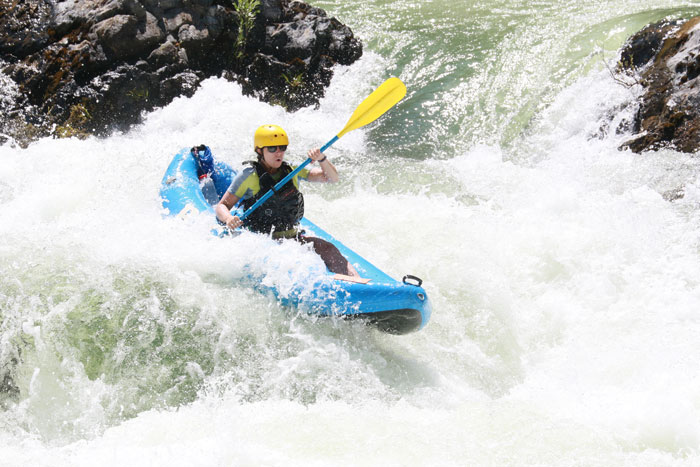
A kayak doubles as a lunch buffet.

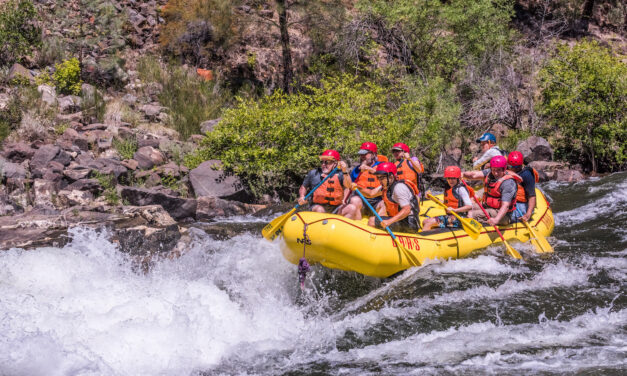
Six Rivers National Forest, Siskiyou County – Six taut inflatable rafts in bright, kindergarten blues and yellows lined the banks of California’s Salmon River, often referred to as the Cal Salmon to distinguish it from the more famous but less challenging river of the same name in Idaho. Contusion, the first batch of Class III-IV rapids boiled a thousand yards down stream. Helmets on, life preservers cinched tight, our paddling skills reviewed and tested, we pushed off into smooth blue-green water.

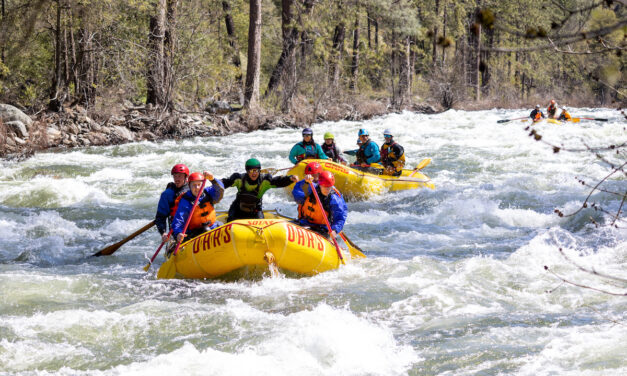
“Hard right!” called out Diego Valsecchi, our Argentinian-born rafting guide and Italian-grandmother schooled chef, from his perch on the back of the raft. Our team of six paddlers responded to his command – three on the left powering forward, three on the right digging their paddles in and back paddling hard off their hips. The boat turned sharply on cue. We were on.

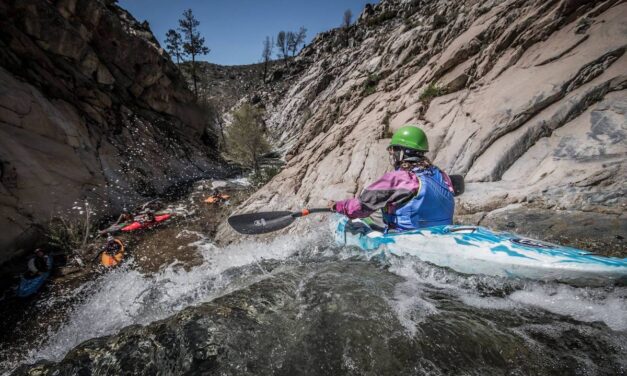
Alex Nicks, one of our safety kayakers, paddled past with quick strokes to position himself below us. Gliding by in his bright yellow kayak, he shouted back in his waggish British accent: “No bobbing cherries in this frosty margarita, all right mates.” Translation: staying in the boat would be a good thing. A native of the UK, Alex is a European kayak rodeo champion and hosts his own series of thrill-packed kayaking videos.

As I would discover over the course of the weekend, the resumes of our unassuming, bohemian guides from Truckee-based Bio Bio Expeditions were impressively diverse: Diego, the eldest of 11 children, grew up on an Argentinian ranch where he helped raise polo ponies and became one of his country’s finest kayakers. Laurence Alvarez is the past captain of the U.S. Rafting Team. Kipchoge Spencer is a graduate of Stanford’s Earth Systems Program (combining environmental sciences and economics) and a talented musician. Marc Goddard is a former history teacher. Ryan Allred holds a master’s in Environmental Science and was U.S. Rafting Team captain and champion in 2000. Together, they had hundreds of thousands of river miles among them.

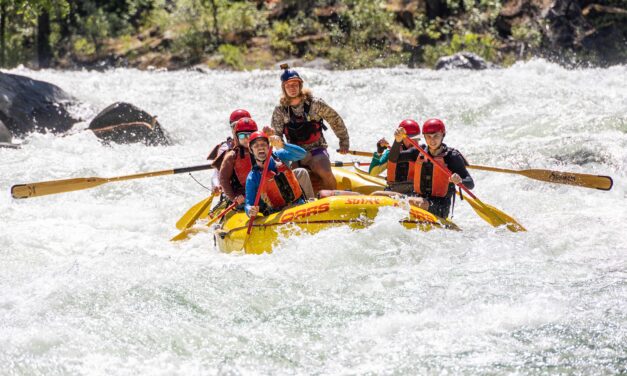
Diego dug his steering paddle deep into the churning water and spun the boat to get us into final position. “Back paddle!” he shouted over the din of the thrashing river. The river had turned from a moving mirror of greens and blues into a stampeding roller coaster of white foam. Waves blasted over the bow of our raft. Our crew of father, son, friends and girlfriends bent forward and pulled hard through the surf, laughing, howling and grunting with each stroke. In a matter of seconds, we were through. The waters calmed, we smacked our paddles above our heads – the rafters’ high-five – then spun to watch the next raft shoot the rapids. Pumped and exhilarated, we paddled with paced, powerful strokes toward our next conquest: The Narrows.

The day started leisurely. Eighteen guests awoke in tents nestled in a tree-lined meadow to the smell of coffee, chai and breakfast: scrambled eggs with sautéed onions, tangerine and cranberry coffee cake baked in a Dutch oven, chorizo sausage, fresh fruit, yogurt and quesadillas. Most of the guests had arrived the night before, many after dark. After chow, we circled around the campfire and played an entertaining name game. We would be family for next four days, and it was time to meet the relatives. Each person, guides included, introduced themselves with a memorable moniker and body motion which was then repeated by the entire group.

“I’m R-r-rob the wr-r-r-iter,” I said rolling my R’s in my best Shakespearean drawl, with a bow. One by one, the group mimicked my intro. Ben the Frenchman. Fancy Nancy. Laurence of Arabia …

With our newly forged nicknames branded into our brains, we were fitted for life vests, wetsuits and paddle jackets, and headed for the river.

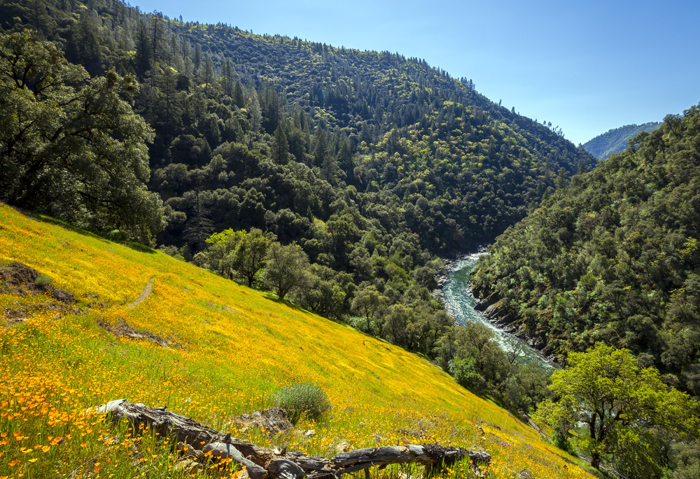
On our first rafting day, we rode in vans to Butler Creek for easier, intermediate-grade rapids (class III and IV). Even at high noon, shadows were constant companions at the bottom of the sculpted granite gorge, cut deep into the Marble Mountains. The crystal clear river, which received National Wild and Scenic River status in 1980, is un-dammed and cold, flowing freely from the snowmelt of the adjacent Trinity Alps.

After successfully maneuvering through The Narrows and Gaping Maw (class IV), we floated into a calm, deep pool flanked by a stunning waterfall. We tied our rafts on the cobbled shore and the staff unloaded waterproof boxes and duffle bags packed with lunch. Kayaks were flipped onto their bellies and became instant buffet tables. Chef Diego sliced veggies, and spread out pita and sandwich fixings of all kinds. Some of us shimmied out on a rock ledge and leapt off into the deep pool. Others peeled down their damp wetsuits and relaxed in the warm sunshine.

Ryan Allred, who lives in the area year-round, told us tales of the Karuk, the Native Americans who first lived in the area, and of the miners and settlers who arrived in the mid-1800s. A bit of California’s gold rush history lives on. As we went downriver, Ryan pointed out metal hasps and anchors drilled into granite walls and boulders. When the rafting season dies down in July and August, a few hydraulic, dredge-mining systems are hooked in and scour the river bottom for placer gold and platinum. The nearby towns of Happy Camp, Sawyers Bar and Forks of the Salmon were rowdy mining towns in their hey day. The area is also notable for another reason: Legend has it that Big Foot, or Sasquatch, has been sighted more often between Happy Camp and Willow Creek than anywhere else.

As we neared the end of the day’s rapids, we collided with California’s second longest river, the Klamath (at 250 miles, only the Sacramento River, 382 miles, is longer). A small island peaked in the middle of the confluence of the powerful rivers. “The Karuk call it Ishi Pishi Mountain,” Ryan explained. “Ishi Pishi in their native tongue means ‘end of’ since both rivers end their separate lives here, then join together as one. For the Karuk, it is the center of their universe, a very spiritual place.”

We pulled out after running Big Ikes on the Klamath, a series of class III and IV rapids less than a mile past the confluence.

Back at camp, a massage room had been set up on the fringe of the meadow, enclosed in mosquito netting. As weary paddlers placed themselves under healing hands, Matt Stevens, 16, played Frisbee with his father in the dusk light. A campfire glowed next to our dining tables, which had been decorated with candles and colorful Guatemalan cloth. Wine, grapes and cheeses held us over as Chef Diego crafted a dinner of pan-roasted salmon with basil, tomato, parsley and olive oil; plus steak, grilled tofu and mushroom kabobs; and a hearty salad. For dessert, we were treated to chocolate brownies baked in the Dutch oven.

After dinner, guide/singer/song-writer Kipchoge Spencer brought out his guitar. Isaac James, his bongo-beating sidekick, joined in, entertaining us with his own passionate, satirical tunes beneath the stars. A full moon rose slowly above the trees and canyon walls, illuminating the meadow and turning the Cal Salmon into liquid silver.

The music had drawn guides from other outfitters to our camp, and when the last guests retired to their tents, these kayak junkies grabbed their boats and headed to the river. They paddled downstream to one of the river’s perfect surfing spots: an endless wave formed by a submerged boulder, creating a churning hole of circulating water. For the next two hours, illuminated by nothing but moonlight, the river brethren took turns riding, spinning and flipping in the curl.

When day two dawned, we were ready to tackle what we came for: Class V white-knucklers. I asked Diego over breakfast what some of the names of the rapids would be that day.

“Well, first there’s Bloomer Falls, then others like Last Chance and Freight Train…”

“We’re going over a waterfall!” I interjected.

“Two, actually,” smiled Diego, mischievously.

We launched from Nordheimer Camp, within walking distance of our encampment. Paddlers were reshuffled from the previous day to balance the power and experience that would be needed in the class V rapids. As conveyed, our first challenge would be Bloomer Falls, a 10-foot drop through a cut in solid granite.

As we glided for toward the chute, we honed our paddling skills. Ben the Frenchman soothed our nerves by leading us into song, singing any tune we could remember the lyrics to. Below the fast moving surface, steelhead could be seen pushing their way upstream.

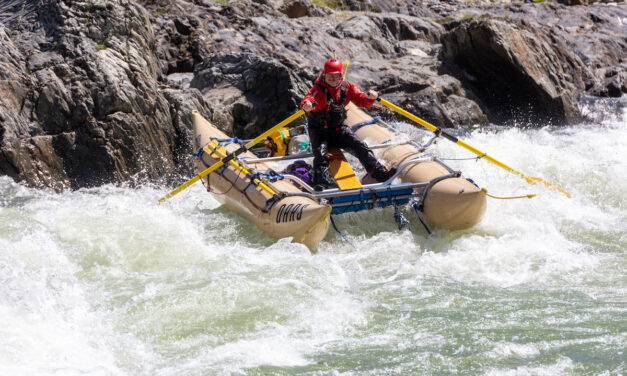
The safety kayakers raced ahead and got in position to pick up any swimmers. One by one, each raft got into position, then blasted through. The rafts pitched over the lip and weresucked into the frothy bowl below. Thoroughly soaked, we bounced like a toboggan careening down a mountain. Our guides, appearing no worse for wear from their moonlit kayak sortie, steered us confidently, making such a thrilling and potentially dangerous shoot appear reassuringly safe.

Below the falls, we realized one raft had suffered an irreparable gash. Its paddlers were distributed among the remaining rafts while the wounded beast was dragged up the cliff face to the adjoining road to be hauled back to camp. As the water raced, our pace quickened, weaving through a boulder field in The Maze, shooting 15 feet off Cascade Falls, bouncing through Achilles Heel (class IV+), Last Chance and the grand finale, Freight Train (both class V).

At the end of our thrilling run, we carried the raft to the trailer. I would have been happy to circle back and run it again, but the thought of dry clothes, a massage, and another of Diego’s gourmet meals made heading back to camp equally tempting. It struck me that this must be the ultimate challenge: to create camp life so rewarding that it competes head to head with nature’s playground. On the Cal Salmon, it had been done … and would be again.

Rob Dunton is a freelance writer/photographer whose work can be found inpublications such as National Geographic Adventure, the Los Angeles Times and Canoe & Kayak magazine.

1
May/08
0

The Yuba River

Three Forks of Liquid Gold for Whitewater Prospectors

By Geoff Jennings

Photo courtesy of Beyond Limits Adventures, Inc./www.rivertrips.com

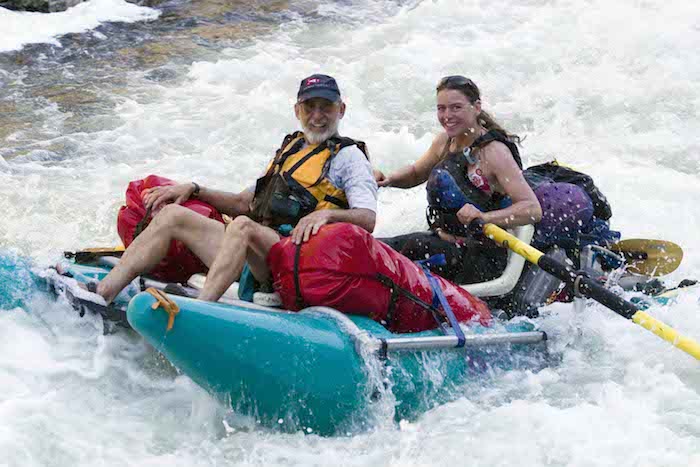
As a refugee of Texas and Southern California, the amount, variety and quality of whitewater rivers in Northern California continues to boggle my mind. Take a map and draw a three-hour driving circle around my Sacramento home and within that circle lies some of the world’s best and most abundant whitewater. Among this abundance, there are many gems, such as the canyons of the Yuba River.

Located just northeast of Sacramento and only a few hours from the Bay Area, the three veins of the Yuba – the north, south and middle forks – tumble down like whitewater gold through a large swatch of the Sierra’s west slope, from Interstate 80 north to Downieville and Highway 49/Yuba Pass, before meeting up and spilling into the Feather River.

Despite their proximity and relatively easy access, the forks of the Yuba get little publicity outside the dedicated paddling community. This is primarily because they drain the milder elevations of the north-central Sierra near Yuba and Donner passes, which makes for a shorter spring/early summer runoff window. And also because most sections of the Yuba cater to advanced paddlers, with the majority of its runs rated class IV or V.

But if you’re not an ace in the hole, or elsewhere in a kayak for that matter, don’t let that stop you from enjoying the Yuba’s Gold Country riches. There are a few stretches suitable for less experienced paddlers, or you can go with a commercial rafting outfitter on the rollicking North Fork – an excellent step up for those looking for an alternative to the popular South Fork American.

In addition to the whitewater action, Yuba River country is home to world-renowned mountain biking, as well as swimming holes and other outdoor diversions, as well as the tranquilo atmosphere of great towns like Nevada City and Downieville that mix an earthy, organic vibe with Western pioneer spirit. Stay a few days and soak it up between runs.

South Fork Yuba

The south fork of the Yuba starts near Donner Summit and closely parallels I-80 for the first few miles. The “Summit Run” doesn’t get paddled as much as the stuff downstream. But it is a raucous granite slide-and-drop filled class IV+ to V+ run, depending on portages. It closely follows the highway, so it’s not remote, but it’s still a scenic high-elevation run with some fun and challenging rapids. Recommended for experienced kayakers only, this is an early-season run controlled by snowmelt.

Downstream, the South Fork is commonly broken into four sections. Below a dam, these sections have unpredictable flows, with the best odds being during the spring runoff. Unfortunately, due to the lack of predictable flows, no commercial outfitters raft this section.

Washington to Edwards is a 14-mile class IV run with one portage. This run doesn’t get paddled a lot, but more boaters should put it on their to-do list. If it weren’t for the unpredictable flows coming out of Spaulding Reservoir, this might be one of the most popular runs in California. It offers quality rapids similar to the Tuolumne and is very scenic. From the put-in at the quaint old mining town of Washighton, six miles off Highway 20, the first 10 miles are pretty straightforward class III-IV. When you reach a rocky gorge, watch for the portage around a rocky 12-foot falls. The rapid below the drop is tough and should be portaged by all but the strongest paddlers. More entertaining rapids follow before you take out at Edwards Crossing.

Edwards to Purdens is a popular early-season run for local kayakers. The first time I did it, we were slipping on ice at the put-in. Not a good day for a swim, but I flipped in the first rapid, lost my paddle, and swam. Lucky for me, it got much better after that! This run is only 4 miles, making it perfect for short winter days, or running laps. It packs a lot of high quality rapids into its short length, with challenging rapids and some sticky holes at higher flows. It is similar in difficulty to the Chamberlain Falls section of the North Fork American. A few of the rapids have consequences,so paddlers should be comfortable on class IV whitewater. It’s gorgeous down there, so take your time and look around. There is a trail alongside the entire section, making it popular with hikers and nudists. Don’t be surprised if you drop into an eddy and see some bum!

Purdens to 49 starts where the last run leaves off. It’s difficult, with some solid class V rapids, but lacks the quality fun of the 49 to Bridgeport section downstream. It’s not nearly as popular and for a visiting paddler I’d probably recommend hitting the other sections first. That said, if you have paddled the rest and are looking for a challenge, it is worth consideration.

49 to Bridgeport is, in this writer’s opinion, the absolute gem of all the sections of the Yuba, and one of the best runs anywhere in California. But with a significant amount of difficult class V paddling, it’s certainly not for everyone. Choked with Sierra granite, the scenery is gorgeous. For the first mile or so, the paddling is fairly easy. Then the river steepens to gradients of 120 feet per mile. Sticky holes, tough moves and dramatic waterfalls combine in rapid sequence to make for a stout overall run. The first time I paddled it I was lucky to follow some solid locals who knew the run like a frequently traveled backroad. It was a fast moving day, and the rapids blurred together in a frenzy of tough moves, hair-raising horizon lines, and barely-made-it-upright escapes. Exciting, scary and fun all rolled into one. Although only 13 miles, expect a full day if you don’t have a guide, as many of the rapids are difficult to boat scout and will require you to pick your line from shore. It’s a must-do for strong paddlers in my book, and that of others apparently. On a nice spring day with good flows you can expect to see some of Nor Cal’s top boaters and visiting hot-shots at the put-in.

Middle Fork Yuba

The Middle Fork Yuba is very rarely run, but has two sections worth noting. Unfortunately, the middle fork is choked with dams, and diversions dewater most of the river to un-boatable levels much of the year. Many years, even during spring runoff, there is little water available. A shame, as these runs would both be valued additions to Nor Cal boaters with reliable or predictable water.

That said, catch them when you can, and your vigilance may be rewarded. The first run, Plumbago Crossing to Our House Dam, I’ve not paddled, but Bill Tuthill, on his excellent website California Creeks (www.cacreeks.com), says that except for a tough portage he would consider this an absolute classic, with an abundance of excellent Class IV. Given Bill’s resume of rivers run, I’ve added this run to my “hit list” for this spring’s runoff.

The section from Our House Dam to Highway 49 runs even less often, with an additional 600 cfs diverted from the flow. But in a big water year, you might be able to catch this run when the dam is spilling. Although an interesting run, it wouldn’t be high on my list, and is mostly something I’d recommend to locals looking for something different.

North Fork Yuba

With runs starting near Sierra City and passing through Downieville, the North Fork Yuba begins to take on much more of a Northern California feel. While the South and Middle forks feature a climate and scenery much like the American, Stanislaus and Tuolumne river drainages, the North Fork looks more like the far north runs in California, with abundant greenery, cold water, and dense vegetation.

Speaking from personal experience, you don’t want to swim on the North Fork. The bushwhacking here is tough, with poison oak, spiny blackberry vines and other prickly snags ensuring a slow and painful walk. Stay in the boat if at all possible.

Downieville is a scenic little town with a decent pizza place, River View Pizza, and a good breakfast spot for pre-run nourishment, C&J’s Downieville Diner. If camping, bring all your food, as the grocery store in town is spendy. Downieville is also a famous hotbed for mountain biking, so bring your bike to balance your wet/dry adventures.

The North Fork is the only stem of the Yuba that gets rafted commercially. There are three permitted outfitters offering 1-4 day trips on over 35 miles of class III to class V water: Beyond Limits Adventures (rivertrip.com, 800-234-RAFT), Tributary Whitewater Tours (whitewatertours.com, 800-672-3846) and Whitewater Voyages (whitewatervoyages.com, 800-400-7238).

Sierra City is the run upstream of Downieville. I’ve only done this run once, at almost double the recommended level, and I mostly remember a white-knuckle terror fest. At that flow there were few eddies to catch and the rapids were huge. Even at the normal levels of 1200 cfs and below, all accounts call this a solid class IV-V. It’s pretty continuous. Shortly before town, the flow will nearly double with the addition of the Downie River, which is itself a product of two classic creek runs, Lavezolla and Pauley creeks.

From Downieville to the Highway 49 bridge is a 13-mile stretch of water, mostly paralleled by the highway. Depending on where you put in, and what you choose to paddle versus portage, this section can be class III-Class V.

If you put in below the bridge in town, you’ll be running the Rossasco Ravine section, with brilliant Class IV rapids, and the best scenery on the North Fork. Most people will do at least one portage in here, though everything can be run.

However, putting in at Goodyears Bar is the most popular choice, and leaves nine miles of whitewater. This is the section run by commercial outfitters. Portage three times, and the run is a fun class III. Two rapids clock in at a solid class IV, and the remaining rapid, the aptly named Maytag, is a solid V. I paddled this rapid once in my playboat and it’s probably the longest I’ve ever travelled downstream completely submerged. A big green tongue leads into a huge hole. I thought I could skirt around the hole, but got pushed straight into it. Instead of getting stuck, I was pushed deep, and didn’t surface until much further downstream. Not really recommended! I’ve run it again in my creek boat with less drama, but shoulder my playboat here ever since.

The Yuba River drainages are gorgeous and offer fun, challenging whitewater that make for a great destination and an awesome resource for California paddlers. Each section has its own charms and challenges. But if you’re interested in experiencing the Yuba, don’t delay. By summer, the liquid gold in its canyons will be running thin and you’ll have to wait until next year to experience its whitewater riches.

1
May/08
0

Top Spring River Trips

Don’t Let the Runoff Pass You By

By Pete Gauvin

Photo courttesy of OARS (www.oars.com)

StanOars

It happens season after season: By the time many California rafters and kayakers get into river mode, streams up and down the state are drying up and coming off the menu.

No doubt, we’re lucky to still have some great rivers that run into and through the summer, either via dam control or watersheds that hang high in the Sierra.

But if you appreciate variety in your whitewater diet, then spring is your smorgasbord. Not only do you have a bounty of rivers to choose from, but from March into June they’re usually at their peak ripeness, and that translates into sweet rapids and beautiful green scenery.

So get down to the pool to practice your roll, sort out your river gear, and start thumbing the guidebooks. The table is set. Get ready to dig in.

Here are eight tasty spring rivers to whet your appetite.

Cal Salmon River

Ask anyone who’s paddled the Cal Salmon and you’re likely to hear extended praise for this wild river tumbling through the Klamath National Forest near the Oregon border. “The Cal Salmon should definitely be on your to-do list,” says Jeff Kellogg of Clavey River Equipment in Petaluma.

Due to its remoteness, the “Cal Salmon” – so-called to distinguish it from the better-known (and easier) Salmon River in Idaho – is never crowded. With headwaters in the Marble Mountains and Trinity Alps, the river flows from the heart of the Coast Range into a bedrock gorge containing many Class IV rapids and at least three white-knuckle Class V rapids.

The most popular run, from Nordheimer Creek to Wooley Creek, is 10 miles long. But there are also great runs above – on the main river and on the North and South Forks – and below, from Wooley Creek into the Klamath River.

Bring your rain gear: This area can get upwards of 80” per year and spring storms are not uncommon.

North Fork of the Yuba

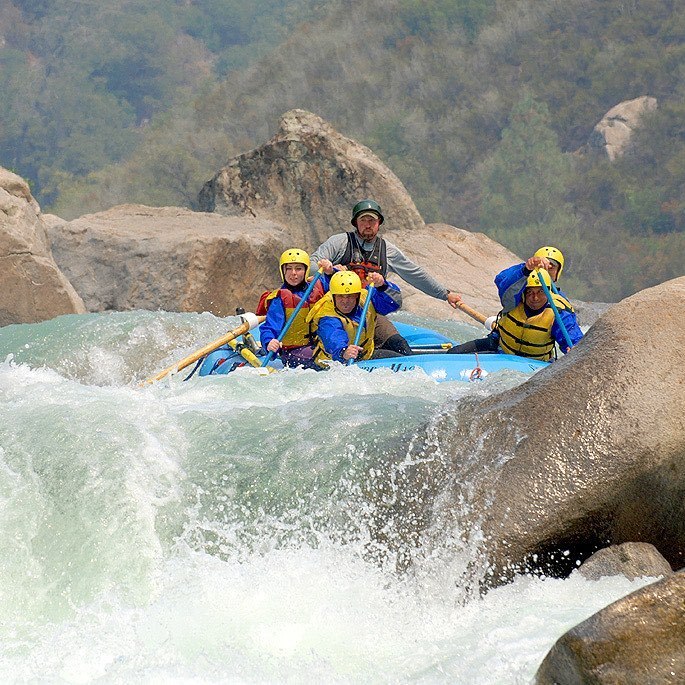
Draining the 8000-foot peaks near Yuba Pass, the North Fork Yuba is a medium-size river that offers up some tough rapids. The most common run is the Goodyear’s Bar run just downstream from Downieville, the well-preserved gold mining town turned mountain-biking mecca. Although mostly Class IV, this run includes the infamous Maytag, a Class V rapid with a big, sticky hole that any repairman would loathe to visit. Experts can take on 10 miles of river above, the Downieville Run, which includes the extended Class V sections of Moss Canyon and Rossasco Ravine.

There is plenty of good camping in this lush forested canyon along Highway 49. Bring your mountain bike for a multi-sport weekend.

Upper Sacramento

Despite the fact that it parallels Interstate 5, the Upper Sacramento River – 36 miles of river between Box Canyon Dam (Lake Siskiyou) and Lake Shasta – is a rewarding river experience both in terms of scenery and excitement.

Below Box Canyon Dam, the river run through a lush canyon of moss-covered cliffs with occasional side creeks and waterfalls, and nearly continuous Class IV rapids. The typical 12.5-mile day stretch serves up more than 50 rapids, providing nearly constant action. You’ll gain a completely different perspective of California’s mightiest river system; no longer will you think of it as just a big, slow, lumbering river flowing into San Francisco Bay.

Got a few extra days? Double up your adventures with a ski mountaineering trip to Mt. Shasta. When the river is running is usually the best time for climbing and skiing this magical mountain.

North Fork American

Just because you’ve been down the South Fork of the American on a scorching hot summer day with scores of other boaters, don’t think you’ve experienced the best the American River system has to offer.

The North Fork American flows through a deep, steep-walled canyon just a couple miles south of Interstate 80. It has become one of the classic advanced/expert runs in the state.

With its headwaters beginning at only 8500 feet near Squaw Valley, it fortunes are directly tied to the snowpack. Thus, once the ski resort closes, it’s only about a month or two before the river’s spigot is turned off and runnable flows are gone. With a good snowpack, you can usually count on flows between mid-March and mid-June.

The most popular run is the nine-mile Class IV Chamberlain Falls run. Just upstream is the 14.5-mile, for-experts-only Giant Gap run, which requires a two-mile hike down to the put in. If you don’t want to brave this Class V run yourself, there are a couple outfitters that offer guided raft trips. It’ll be a trip you won’t soon forget.

The Eel River

Coastal range streams like the Eel are often overlooked by rafters and kayakers come spring. But the rain-soaked Eel usually flows until June and offers one of the few long overnight float trips in California.

The Dos Rios to Alderpoint run (46 miles, 3-5 days) on the main Eel is a classic spring float with excellent scenery and a wilderness feel, despite the railroad tracks that follow its course. It features intermittent Class III rapids and numerous sandy beaches for camping.

Still more remote, the Middle Fork of the Eel is considered one of the best

TributaryShot

Photo courtesy of Tributary Whitewater (www.whitewatertours.com)

long wilderness runs in California. It drains from a higher watershed of 7000-foot peaks in the Yolla Bolly Wilderness, thus its season runs a bit longer with the benefit of snowmelt. The Black Butte River to Dos Rios run on the Middle Eel ranges from Class II to Class IV over its 30-mile length. Got a full week? You can combine this with the Dos Rios-Alderpoint run for a float 76-mile float.

(Note: You’ll need to arrange your own trip on the Eel; there are no known outfitters at this time. A good resource is Friends of the Eel River, www.eelriver.org.)

Kaweah River

The Kaweah flows out of Sequoia National Park east of Visalia. It is one of the steepest rivers in the U.S., dropping nearly 11,000 feet from its headwaters in only 20 miles. Despite this, it is one of the lesser-known Sierra rivers.

The Kaweah deserves more attention from rafters and kayakers, as it serves up one of the most continuously rocking runs you’ll find. The common run starts at the Gateway Bridge on Highway 198, just west of the entrance station for the park. (Note: It’s illegal to kayak or raft inside the national park.) Amid large boulders, Class IV and V rapids greet you from the get-go. The action continues relatively unabated for six miles. You can take out here at the North Fork Drive bridge, but most trips float another four miles of Class II-III water (plus one IV) to the aptly named Terminus Reservoir.

East Fork Carson

Why would advanced and expert rafters and kayakers drive over the Sierra each spring to float the Class II Carson? Because it’s unique, it’s beautiful and it’s got hot springs.

Flowing eastward from Markleeville into Nevada, the Carson makes for an amazing overnight trip, with beautiful high desert ranch land views and camping spots with hot springs right on the river.

BONUS TRIP:

Illinois River, Oregon

The Illinois is in southern Oregon, but it’s about the same distance driving from the Bay Area as the Cal Salmon. A tributary of the Rogue River, the Illinois is considered by some guides to be their favorite trip in the world. Although similar in scenery to the Rogue, it has better rapids and fewer people. There are only two commercial outfitters and each is given only one permit per week.

The 32-mile run is rated Class IV-plus, with one Class V. Because it is entirely a rain-fed river and there’s no dam upstream, flows can drop out of runnable levels after extended dry periods. This is usually not a problem through April. Come May, it’s a bit more iffy.

1
May/07
0

Fickle Trickle

Photos courtesy of Zephyr Whitewater.

Despite slim snowpack, dam good whitewater season on tap

With less than half the average snowpack in the Sierra, boaters are expecting short seasons on most of the state’s rivers. But there’s no reason to put away your skirt and paddle early. While May and early June will present the widest range of options for roaming boaters, with good planning you can find whitewater playtime all summer long.

To help you make the most of the season, we have compiled a select list of California rivers and arranged in order of what’s expected to be the best “in the ballpark” time to float them, from May on: “Early Season” (until mid-May or June), “Good till Mid Season” (through June, perhaps into July), and “All Summer Long Bets” (dam-controlled runs with releases expected all summer).

Schedule your trips accordingly and you can make the most of each and every cubic foot rolling down the mountains and keep on paddling right into fall. Of course, these are somewhat subjective categorizations; for up-to-date river levels check online websites, such as www.dreamflows.com.

Editor’s Note: River running should always be approached with care and responsibility. Unless you’re an experienced boater, we recommend taking advantage of the services of a professional outfitter (see sidebar).For those wanting a float trip without the whitewater thrill, check out Soar Inflatables at www.soar1.com for Russian River trips or Sunshine Rafting at www.raftadventure.com for trips on the Lower Stanislaus.

Early Season

Cal-Salmon

  • Expected Season: Usually into early summer; through May this year
  • Runs: Cal Salmon Run (Class III-IV+), Forks of Salmon (Class V), North Fork above Sawyers Bar (Class III-IV, 8 miles)
  • Outfitters: IRIE Rafting Company, Tributary Whitewater Tours, Redwoods & Rivers, Otter Bar Kayak School, W.E.T. River Trips

The “Cal” Salmon is an emerald green classic California pool-and-drop river that should be included in any local paddler’s must-do list. Ultimately a tributary of the Klamath, the Salmon passes through some of the most remote regions of the north state. The North Fork run above Sawyers Bar is considered one of the best moderate-advanced runs in California with only short breaks between rapids.

Upper Sacramento

  • Expected Season: April-July normally, mid-late May this year
  • Runs: Box Canyon Dam to Lake Shasta (III-IV, 36 miles): Box Canyon to Dunsmuir (Class IV, 7 miles); Castle Crags to Sims Flat (III-IV, 9 miles); Sims Flat to Lake Shasta (IV, 14 miles)
  • Outfitters: Turtle River Rafting, River Dancers, Living Waters Recreation

For 36 miles between Box Canyon Dam (Lake Siskiyou) to Shasta Reservoir, the Upper Sac resembles the wild river it once was. Near continuous Class IV action greets boaters after the steep, difficult put-in. Creek after creek and a few waterfalls tumble into the Sacramento, sometimes tripling its volume. Despite running parallel to Interstate 5 and a railroad, the Upper Sac offers good scenery. Particularly memorable is Mossbrae Falls, a fern-covered spring that gushes from the cliffs, around mile five.

East Fork Carson

  • Expected Season: Until mid-late May this year
  • Runs: Upper East Fork (Class III), Cave Rock to Hangman’s Bridge (7 miles); Wilderness Run (Class II+, 20 miles)
  • Special features: Designated Wild and Scenic, hot springs at river’s edge, Eastern Sierra scenery, novice friendly
  • Outfitters: Tributary Whitewater Tours, W.E.T. River Trips, American River Recreation, Tahoe Whitewater Tours

From Markleeville into Nevada, the Carson winds through miles of inspiring high-desert country framed by snow-capped Sierra peaks. Hot springs and no-fee campsites half-way down the 20-mile Wilderness Run make for an ideal overnight trip. Although it’s rated only Class II+, cold water, continuous rapids and sharp rocks mean it’s not a good place to take a swim. Spring storms occasionally coat unprepared boaters with snow. Intermediate-advanced boaters can put in upstream of Hangman’s Bridge on the Class III Upper East Fork run.

North Yuba

  • Expected Season: Until mid-late May this year
  • Runs: Downieville (Class V); Goodyears Bar (Class IV plus one V, “Maytag”)
  • Outfitters: Beyond Limits, Whitewater Voyages, Tributary Whitewater Tours, Wolf Creek Wilderness (kayak instruction on Lower Yuba)

This river requires your constant attention. Only expert private boaters with solid safety skills should attempt the North Fork. This 18-mile stretch is often run in two sections, the Downieville run (expert) and Goodyears Bar (advanced). Highway 49 parallels the river offering alternative put-in and take-outs, and easy shuttles. The Downieville run features continuous Class IV and V water, including mile-long Moss Canyon (solid V). Downstream of Goodyears Bar bridge (mile 9.5), the gradient eases and rapids are milder, with one notable exception: Maytag, a big drop that thrashes many.

< class=”articleTITLE”>Good till Mid-Season

Merced

  • Season: Until perhaps mid-June this year
  • Runs: Class IV+, Red Bud to Briceburg and Briceburg to Bagby; Class II between miles 9 and 16
  • Outfitters: Zephyr Whitewater, OARS, All Outdoors, American River Recreation, ARTA

The Merced is a challenging Class IV river that runs best in spring. What you’ll find are some of the best rapids in the state, including paddle-sucking laterals at Ned’s Gulch (IV) and a challenging boulder-dancing section, Quarter-Mile Rapid (IV+), with severe consequences if you don’t eddy out at the bottom; North Fork Falls, a 25-foot drop, is a mandatory portage. Class II from here to take out at Lake McClure.

Kings

  • Season: At least into July, possibly later
  • Runs: Class III-V+

    Banzai (III), South Fork, North Fork (V- to V+), Kings Canyon (V),

  • Special features: Native American sites, steep canyons, roostertails, natural waterslides
  • Outfitters: Zephyr Whitewater Rafting, Kings River Expeditions, Whitewater Voyages

Originally known as “El Rio De Los Santos Reyes,” or River of the Holy Kings, the Kings courses through some of the deepest canyons in California. Its tributaries are all Class V until it reaches Garnet Dike, where the Class III+ section begins. From there, this river is all fun with little to fear. Bring the whole family and train your young river rats right. The Kings will likely be runnable through July, but better earlier.

Kern

  • Runs: Forks of the Kern (III-V), Lower Kern runs: Picto (III); Gusto (IV)
  • Special features: Wild & Scenic river status; drains California’s highest peaks, including Mt. Whitney; massive granite boulders, multiple waterfalls
  • Permits: Through United States Forest Service (USFS), www.fs.fed.us
  • Outfitters: Kern River Tours, Kern River Outfitters, Whitewater Voyages

Regarded as one of the finest stretches of expert whitewater to be found, let alone commercially rafted, the 17-mile Forks of the Kern run begins with a two-mile hike to the put in. Your reward is a nearly continuous series of more than 80 rapids against a backdrop of granite slabs, waterfalls and remote mountain scenery. With a nearly 60-foot per mile gradient, this river is action packed and not for the timid. Commercial outfitters must pass a test to certify their river fitness. Private boaters should have notched a few Class V runs before attempting the Forks of the Kern.

Truckee

  • Runs: River Ranch to Floriston (Class II-III), Boca to Verdi, Nevada (Class II-IV)
  • Special features: Alpine scenery; proximity to Reno Whitewater Park
  • Outfitters: Tahoe Whitewater Tours, Tributary Whitewater Tours, Truckee River Raft Company (rentals)

The Truckee offers easy to moderate runs with easy access. For the first three miles from the outlet of Lake Tahoe to River Ranch, the Truckee is a lazy party float. From River Ranch it picks up to Class II+, albeit shallow and rocky. Highway 89 follows the river for the next 10 miles. At Truckee, the river turns east. From here until its confluence with the Little Truckee River at Boca, it is mostly Class II, except for one Class III boulder garden. The Boca-Floriston Run paralleling Highway 80 is the most advanced run with the quarter-mile Class IV Bronco Rapid providing the most excitemtent just before takeout. Downstream, there is runnable water all the way to Reno, including a few diversion dams. Smack downtown, the Reno Whitewater Park provides a great playboating and teaching venue.

Mokelumne

  • Runs: Electra Run (Class II+, III above 1,500 cfs), Salt Springs Reservoir to Tiger Creek Dam (Class IV-V)
  • Special features: One of the best training runs in California; good scenery, abundant wildlife
  • Outfitters: None

Typically, this is a great river to warm up for the season or to introduce novices to whitewater. Due to its convenience to the Bay Area, its reliable summer flows, and rapids that gradually step up in difficulty, this has long been a favorite training run for kayakers. You can run this short run a few times in a day to really hone your technique; the shuttle only takes 10 minutes. You’ll find it off Highway 49 between Jackson and Mokelumne Hill.

< class=”articleTITLE”>All Summer Long Bets

Tuolumne

  • Runs: Class IV-V+, Grand Canyon of the Tuolumne (IV-V), Cherry Creek (V), Lower Tuolumne (IV-V)
  • Special features: Wild and Scenic status; Clavey Falls, North Fork and Clavey River swimming holes.
  • Permits: Required for private boaters. Groveland Ranger Station, (209) 962-7825
  • Outfitters: Sierra Mac River Rafting Trips, Zephyr Whitewater Rafting, OARS, ECHO, ARTA

The Tuolumne, or “the T” as it’s affectionately known, offers one of the few multi-day trips in the central Sierra, an unspoiled wilderness experience and miles of exhilarating whitewater. The stretch from Meral’s Pool to Don Pedro Reservoir, with rock gardens, stomper holes and lateral hydraulics, is a good proving ground for kayakers and rafters who want to cut their teeth on some technical Class IV. For expert boaters, a day trip on Cherry Creek segueing into a lower T trip with some of the most experienced guides in California will impart fear, exhilaration and a proper river education.

Klamath

  • Runs: Upper Klamath Hell’s Corner Run (Class IV+), Lower Canyon (Class II-III)
  • Featured run: Upper Klamath (17 miles, 1-2 days)
  • Special features: Longest Wild & Scenic river in the state, snow-capped Trinity Alps, excellent multi-day trip possibilities
  • Outfitters: Tributary Whitewater Tours, Trinity River Rafting, Redwoods and Rivers, All Outdoors, Turtle River Rafting Company, W.E.T. River Trips

The second largest drainage in all of California next to the Sac, the Klamath originates near Crater Lake and then cuts through a high-desert volcanic canyon. The Upper Klamath run begins in Oregon, and features sharp volcanic rocks that are tough on boats and paddlers. Only expert kayakers should consider this run. Rafters enjoy the challenging descent on the Hell’s Corner stretch (IV+). Lower down, the Klamath offers a hundred miles of Class III water that makes for excellent one-day and overnight trips. With moderate rapids, easy access, warm water, good camping, and relatively light use, this stretch makes a great multi-day float in late summer and fall.

South Fork American

  • South Fork runs: Chili Bar and Gorge Runs (Class III)
  • Special Features: This river system offers something for every level of boater
  • Permits: Just on the South Fork (available at Chili Bar, Coloma and Lotus put-ins)
  • Outfitters: EarthTrek Expeditions, The Mother Lode River Center, Whitewater Voyages, Mariah Wilderness Expeditions, Whitewater Excitement, River Runners, Current Adventures Kayaking, ARTA, Gold Rush Whitewater Rafting, Action Whitewater Adventures, W.E.T. River Trips

The South Fork American is the most popular of all California rivers. Highly accessible and owning the longest season in the state, upwards of 100,000 boaters per year splash down its three distinct sections. The Chili Bar to Coloma run (which includes the Meatgrinder and Troublemaker rapids) offers five miles of entertaining Class III-IV water. Below this, the stretch from Coloma to Greenwood Creek offers several miles of Class II water that makes an ideal training ground for budding kayakers. Downstream of Greenwood, the Class III Gorge section begins and Satan’s Cesspool (III+) lurks before you reach Folsom Lake.

Trinity

  • Runs: Main Trinity, Pigeon Point run (Class III), Burnt Ranch Gorge (V)
  • Featured run: Burnt Ranch Gorge (V, 8.5 miles)
  • Special Features: Designated Wild & Scenic river
  • Outfitters: IRIE Rafting Company, Trinity River Rafting, Tributary Whitewater Tours, Turtle River Rafting Company

Along Hwy 299 about 60 miles east of Arcata and 89 miles west of Redding, the famed Burnt Ranch Gorge section of the Trinity drops through sheer canyon walls for eight miles of Class V thrills. Boasting rapids with names like Pearly Gates, Jaws and Origami (for its tendency to fold rafts like paper), Burnt Ranch is regarded as one of the finest expert runs in the West. If that’s beyond your comfort zone, the 5.5-mile Pigeon Point run just upstream is one of the best intermediate runs in California. And because it’s a long drive, the Trinity is a lot less crowded than runs like the South Fork American. Your reward is good scenery, clean water, and numerous play spots.