Feb/114
Skate Skiers Unbound

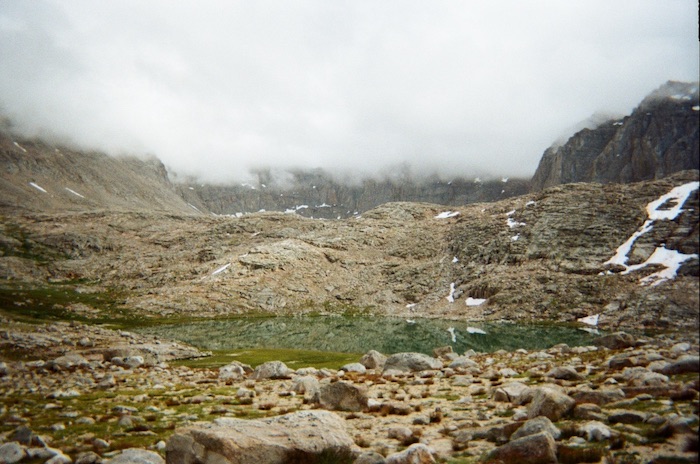
Temperature inversions during clear sunny stretches in Sierra Valley can produce a skiable crust on meadows.
Backcountry skate skiing captivates, doles out lessons to Tahoe writer
Story and photos by Laura Read
In the early spring, when warm days melt snow crystals into a fine paste and frigid nights freeze them to a crust, Mother Nature extends an invite to skate skiers to stray from the confines of machine-packed trails onto an open canvas of boundless gliding and backcountry exploration — no groomed tracks, no trail passes, no limitations.
Indeed, when the freeze-thaw cycle persists and the snowpack settles into a dense and supportive surface resembling frozen cheesecake, skate skiing provides the swiftest means of traversing a snowy landscape under one’s own power, allowing for speedy forays deep into Sierra canyons and across open meadows and frozen high-country lakes.
Though best suited to flat and rolling terrain, the gliding efficiency of a capable skier on lightweight skate gear can make a backcountry skier shuffling along on skins look like a gear-laden tortoise next to Apolo Ohno. Most backcountry skate skiers don’t seek out high-angle terrain, but when conditions are just right — a firm base with a sun-warmed top of buttery corn — moderately steep slopes are not beyond limits of fearless skinny-ski descenders.
Some adventurous skate skiers have been known to knock out multi-day backcountry tours of 30, 40, even 50 miles in a day; trans-Sierra tours like Mammoth to Yosemite and crest traverses such as Donner Summit to Echo Summit.
Neophytes, of course, are urged to start with something a little less ambitious and closer to civilization — for as I found out, there are lessons to learn.
The first time I tried skate skiing on a glossy crust of frozen snow, my husband, Doug, and I were in the Martis Valley next to Truckee. Before dawn he’d nudged me awake saying, “Let’s go skate on a meadow. Conditions are perfect.”
Perfect? The outdoor thermometer read 25 degrees F.; sunrise was an hour away. Nevertheless, into the car we went, wrapped in thick hats, gloves and extra sweaters.
At Martis Meadows, located between the Truckee airport and Northstar-at-Tahoe, the snow was a pre-dawn shade of cool blue, and beneath the plastic grooves of my cross-country boots it crunched slightly.
Quite different from classic cross-country skiing, which employs a scissors-like kick-and-glide movement, skate skiing has a side-to-side momentum that mimics ice skating or in-line skating. The ultra-light skating skis are treated with glide wax from tip to tail, which makes them ultra fast. My first push off onto the smooth snow sent me into a whizzing glide that felt incredibly light and free.
However, my enjoyment was diminished by the icy chill of the air, because even though I had lots of warm clothes with me, I didn’t have exactly the right clothes.
Lesson #1: A wind jacket isn’t enough for these early morning jaunts. Wind pants are key so your legs don’t go numb.
Despite the frigid dawns, I became a meadow skiing junkie. One spring when we heard Lake Almanor was having warm days and freezing nights, Doug booked a motel room in Chester. Chester! I exclaimed. Couldn’t we go somewhere more dramatic — down the Sierra’s Eastside, for instance? But Doug had an inkling that Chester would be good, and so we went.
As we got started the next morning a cloak of fog snuffed out all the scenic features — the fluffy green trees, the big lake, the mountains — so we stayed close to the lakeshore. Slowly, the fog shriveled into curly threads that hugged the streams. We cruised up one creek into a nearby meadow. Sunshine lit up the sky, revealing a landscape awash in snow crystals. But the best reward was the long vista once everything cleared: In the distance, snow-domed Mt. Lassen boomed up from the forest like a kingdom from the Lord of the Rings.
Lesson #2: Don’t let the fog deter you.
One night a friend called to say she’d heard Anton Meadows above Tahoe City had a frozen crust. To reach Anton the next morning, we used the groomed trails of Tahoe Cross Country ski area, where we had season passes. Most cross-country centers contain a couple of flat open places that freeze and thaw in the springtime: Tahoe Donner has the Euer Valley, Kirkwood has Kirkwood Meadow, and the Tamarack Cross-Country Ski Center in Mammoth has snow-covered lakes.
On this particular morning, the slender shards of hoar frost sparkled across the surface as if someone had sprinkled a million diamonds there. Once we left the trails, we could ski wherever we wanted to go. I swooped between willows, scampered up hillsides, circled creek holes, and inspected rabbit tracks.
Lesson #3: Check out the meadows next to groomed ski center trails.
Doug and I bought a small camper, and now we travel often on Highway 395 to where the glacier-scooped valleys of the Eastern Sierra provide endless meadows for long days of skate skiing. On one early excursion into a canyon below Mt. Emma near Sonora Pass, Doug asked if I wanted to take a peanut butter and jelly sandwich in my fanny pack. I said no. I had plenty of Gu’s, those 100-calorie packets of gooey carbs laced with caffeine.
It was a spectacular tour. We skated up the canyon, following an open creek, dodging willow bushes and peering at transparent ice lips growing out of the snow banks above the rushing creek. We climbed a glacial moraine and scooted through an aspen grove. A couple of hours passed and I swallowed one Gu after another. We crested a knoll to see another irresistible glistening valley ahead of us. We flew into it, hooting with excitement and feeling free as eagles. Then, bonk. My energy drained away as if someone had pulled a plug. I had eaten all my Gu’s. I found Doug ahead sitting on a stump, nibbling his sandwich. He kindly shared it. Refueled, I zoomed back to the camper, where I took a nap.
Lesson #4: Always take the PB&J.
Backcountry skate skiing can test all of your limits. Sun comes from all sides, so wear a good sunscreen, big hat and a long-sleeve lightweight wind-shirt. Carry extra water and don’t wear dark-colored, heat-absorbing clothes.
And then there are the survival issues: Travel with a friend, know your terrain, and leave a note on your car describing your route and when you’ll be back.
Lesson #5: Be prepared for anything.
The sweetest aspect of spring skate skiing is that it can be done anywhere. The snowpack simply needs to be gathering lots of sunshiny warmth during the day, and freezing hard at night. My favorite finds include a couple of meadows on Highway 89 between Truckee and Sierra Valley, any snow-covered alkali flat in Nevada, anyplace at all in magical Hope Valley off Carson Pass, and meadows around Tioga Pass and Crowley Lake, near Mammoth.
Lesson #6: Skate skiing is a great way to get deep into the backcountry quickly and with ease.
Feb/110
Three Classic Eastside Couloirs
For some skiers, nothing beats “getting walled”
Story and photos by Brennan Lagasse
Although California’s ‘Range of Light’ is known for many things, to backcountry skiers it’s famous for some of the best couloirs found anywhere on the planet. Striking corridors of snow easily identified by the rock walls that make up their borders are plentiful in the Sierra, nowhere more so than off that black ribbon of mountaineering dreams, Highway 395.
Peak bagging, chasing powder, dropping a steep cliff face — these are all easily understood and revered for their worth in the ski world. However, those of us who look for the most aesthetic line on any given peak know couloirs offer some of the most unique and satisfying ski descents any snow slider can find.
Some choose to look past the adventure that’s found when couloirs become primary ski objectives while others don’t, or rather can’t.
When you climb your line, you gain intimate acquired knowledge about the snow you’re planning to ski. It takes a lot longer to ski this type of terrain, and depending on one’s chosen objective, you might have to plan for long days in the field. But once you’ve ascended your line, taken in the view from wherever you’re planning to drop in, and arc your way down a sliver of snow lined by beautiful natural walls of rock, you’re hooked.
As much as I love powder and new mountains to climb and ski, I’ll choose a couloir descent over a snowfield, ramp, bowl, or ridge any day.
There’s a plethora of choices for “getting walled” in the Eastern Sierra. There are so many notable descents the tick list is literally never ending. I’ve found once you tick one off there are easily five more to replace it. It took me a while to think of just three specific couloirs to highlight. What to choose? The Matterhorn has its East and West Couloir. North Peak’s North Couloir and just about every line that drops off the Dana Plateau is pure bliss. What about the Scheelite and Mt. Emerson and its North and Zebra Couloirs? How about the Mountaineers Couloir off the highest peak in the lower 48? We could go on for days here, but I was finally able to choose a few that I think are about as worthy as any line you can find anywhere.
Here’s a breakdown of three absolute classics listed by increasing level of difficulty and reverence.
Pinner Couloir, Laurel Mountain
- Top of descent elevation: 11,800’
- Descent in Vertical Feet: 3400’
- Slope: 35-38 degrees
- Aspect: East
- Distance from trailhead: 3.25 miles
- GPS: 37.578/-118.890
- USGS Map: Convict Lake
Notes: In a range packed to the brim with aesthetic couloirs, the Pinner holds its own as one of the most beautiful lines in California. There are two options for access. One is to first summit Mt. Laurel via the northeast ridge and then traverse to a large east facing bowl, which is the entrance to the couloir. But booting up the couloir is the best way to know what you’re getting into and what snow conditions will be like. Contour around the northeast face of Laurel up into Convict Canyon for this route. The couloir entrance will come into view on your right as you gain some elevation. Conditions in the Pinner can change quickly, and since it faces east, snow quality is always a question. The Pinner is a frequent flusher as well, meaning it sheds new snow often during and after storm cycles. The large rock walls shade the couloir for most of the year. The adventure with the Pinner is you can never see too far in front of your current turns. Extreme caution should be taken since this line does harbor rock fall and avalanches frequently and once you’re in it there are very few safe spots. As far as aesthetic couloirs go, this is a fairly accessible, gorgeous line; not too far from the trailhead or exceptionally steep.
Bloody Couloir, Bloody Mountain
- Top of descent elevation: 12, 522’
- Descent in Vertical Feet: 5342’ (about 2600’ for the couloir proper)
- Slope: 40-45 degrees (depending on time of year/snowfall)
- Aspect: North
- Distance from trailhead: 6.5 miles
- GPS: 37.561/-118.909
- USGS Map: Bloody Mountain
Notes: The Bloody Couloir is one of the most classic lines on California’s Eastside. Recently named as one of the 50 Classic Ski Descents of North America it’s hard to find a more prominent line off the 395 corridor. You can actually see the Bloody Couloir many miles away dropping down Conway Summit to Mono Lake, and as you get closer and closer to Mammoth Lakes it just looks better and better to ski. This line is a step up from the Pinner in terms of steepness and overall rowdy factor and your experience will greatly depend on the time of year you choose to ski it. It’s seen tracks as early as October and as late as July. The approach can be considerably shorter if the high-clearance four-wheel drive road leading to the base of the couloir is passable. Otherwise it’s just a long slog to the base and boot up. Generally, the Bloody is considered to be about 42-43 degrees, but less snow in November or ample snow in May causes the pitch to either grow or back off.
North Couloir, Red Slate Mountain
- Top of descent elevation: 13,163’
- Descent in Vertical Feet: 5583’ (about 2000’ on the peak proper)
- Slope: 45-50 degrees
- Aspect: North
- Distance from trailhead: 8 miles
- GPS: 37.509/-118.869
- USGS Map: Convict Lake
Notes: In my opinion, this is the one. Building in difficulty and grandeur from Pinner and Bloody, the North Couloir of Red Slate Mountain is one of the most beautiful ski lines in the lower 48, let alone California. The North Couloir splits off the top of Red Slate and once a backcountry ski mountaineer views this gem for the first time, it’s just about impossible to think about anything else until they ski it. It’s a perfectly silhouetted peak on the Sierra Crest, with a perfect couloir right down the middle. The danger factor and exposure is much higher on Red Slate, and a lot of that will depend on which way you access the North Couloir. Either take the west ridge to the top, or climb the North Couloir if that’s what you plan to ski. Once at the top of the couloir either head left across an extremely exposed face where a fall is not an option or head right, if possible, through what’s known as the alternate entrance. This is a much less exposed and safer way to get into the North Couloir. The couloir proper is much bigger than it looks from afar, about 100 feet wide. It’s a straight down fall line, 2000 feet of sustained steep skiing, and easily one of the most memorable runs found on the Eastside.
Dec/100
Lake Tahoe Backcountry Vertical Competition launched by Alpenglow Sports, Tahoe City
Sports, North Lake Tahoe’s premier backcountry ski and outdoor retailer for more than 30 years, has partnered with industry-leading outdoor manufacturers Black Diamond, Dynafit North America, Patagonia, and Marmot to create an unprecedented challenge for the region’s backcountry skiing community.
“Tahoe’s consistently deep snowpack, long spring season and copious bluebird powder days have spawned a tremendously motivated backcountry user group that cumulatively, put in an astounding amount of human powered vertical each winter,” says Alpenglow Sports general manager Brendan Madigan, who with challenge co-creator Jeff Dostie, another admitted backcountry powder addict, logs more than half a million vertical feet each season. “Our goal is track that data and use it to unite and inspire the entire backcountry skiing community.”
This free, “earn-your-turns” event will be characterized by a simple on-line format at www.TahoeVertical.com, where participants can enter their daily vertical feet collected on skis, snowboard, and snowshoe or simply hiking. The challenge will collect data from all participants from Dec. 10, 2010 through May 1, 2011.
The inaugural 2010/11 “Lake Tahoe Backcountry Vertical Competition” will award grand prizes from Black Diamond, Dynafit North America, Patagonia and Marmot to the top three men and women, as well as display daily updates on the overall vertical feet collected by the community throughout the season.
As Lake Tahoe’s original backcountry ski shop, Alpenglow Sports seeks to encourage human-powered backcountry skiing and riding in Lake Tahoe’s world-class terrain while creating a shared forum that is both fun and inspiring. Backcountry users of all levels are encouraged to participate, from professionals to weekend warriors. Weekly raffles will also be held for all participants. The contest will rely solely on honest and accurate data entry from all participants, false entries and exaggerations will not be accepted.
For specific rules and regulations, please see www.TahoeVertical.com, call Alpenglow Sports at 530.583.6917 or email brendan@alpenglowsports.com
Sep/080
Like Surfers Gone Alpine
Pondering the nature of alpinism in the High, and mild, Sierra
By Doug Robinson

Hidden in plain sight: the untouched north face of Birch Mountain, seen as you drive up to the Palisades. Still, it took several years to notice, then decades to go climb it.
Photo Doug Robinson
“What is alpinism, anyway?” Terry Kearney was starting to rave as we burned through the last of our fuel. It was the morning after our second bivy. The sun played coy with our perch on the north face of Birch Mountain, in the outer orbit of the Palisades. “Is it all speed-aided 72-hour push up some heinous M8 wall? Is it just Steve House and the latest mad Hungarian? I love reading about that stuff, but I’ll never touch it. Maybe it’s more like two old men sharing one Ramen and no coffee for breakfast.”
Laughter broke out. High on this California version of alpine, we were starting our third day on an untouched north face in the Sierra, which after all is a semi-desert mountain range. Climbing in early May so the face would be sure to have snow on it, we hadn’t done a move over 5.6. Above us lay a bewilderment of ridgelines, not to mention lurking pockets of stacked terror blocks.
We’ve long since abandoned the direct. (Although, we keep telling ourselves, we can always come back for that.) We have no pretense of the cutting edge here. Like Terry, I’m in awe of the alpine feats of Dean Potter and Timmy O’Neill in far off Patagonia, and of everyone who has set a front point to Changabang (a steep, rocky 22,520-foot peak in the Indian Himalaya). But here we are instead, pacing through sagebrush approaches in running shoes like errant surfers. Everyone knows California sports some stout rock climbing. But our alpine zone, like our weather, is often a bit gentler. This is more like what my Palisades mentor Smoke Blanchard called “mild mountaineering.” We could care less; we’d much rather revel in our good fortune to be nowhere else but right here. No envy, no regrets, just pile on the fun-hogging. To us, alpinism means less. And more.
Anyway, powered by six noodles we sidled west over a black ridge, down two raps, and chopped a full pitch of steps across a crescent of couloir. Not exactly the direct line.
“Holy fuck! Rock!” I snapped the belay tight. A loose block had rolled onto Terry’s ankle, searing his shin. A moment of blind panic, then another moment of regaining composure. It’s OK … this time.
The wariness is constant. Bands of looseness have cropped up ever since we stepped off the snowfield approach onto blocky fourth class. That was two days ago now, and in spite of long stretches of stellar solidness and dreamy incut holds – like snaking right up the center of the first buttress easy as you please – the teetering and hanging stuff keep punctuating. If the architecture of this north face is reminiscent of Temple Crag – which is only 8 miles away – then the wariness of stacked blocks and loose flakes is familiar too. As Robinson Jeffers put it, “History falls on your head – like rocks.”
Terry remembers. Two years before, we were climbing on Temple Crag itself when a head-sized block clipped his shoulder. We patched him up and went on. His wife, Mauri, was more freaked than Terry – she had dislodged it at a touch. Mauri and I watched in terror, the long moments lengthening, as the block ricocheted. Terry poised like a cat, waiting out its sudden, random re-direction. It lurched again; Terry made his split-second move. The block whizzed through the spot his head had just left. His helmet wouldn’t have helped much.
That day on Temple Crag, we went on, engaging the upper pitches of the Moon Goddess Arete. I had never done the second half of that climb – not in 35 years of guiding on the crag. See, there’s a bail-out spot half way, left into a gully. Mighty handy for slower parties, and it’s true that I’m not known for putting much alpine into my alpine starts. So it was an adventure that afternoon to unfold the traverse to the right and the steep crux above. I raced up it, climbing fluidly and pushed by darkness, thinking that the upper pitches actually felt less loose. Since then, that high crux pitch has claimed two lives.
So I’m going to come right out and say what’s been building inside me for years now: the Moon Goddess is no longer a rock climb. It’s just gotten too loose. Stay off. Do the Venusian Blind instead. I’ve hesitated mightily to say this because it seems crazy that a climb has gotten looser. Much more likely, I figured, that I was just getting old and conservative. Logical for the change to be in me – creeping old-fart-ism.
But then I ran into an odd story that sparked me to propose the theory of the Atomic Broom (for the full story see the sidebar, “The Atomic Broom Theory” at the end of this article ).
The gist: During the height of the Cold War 1950s, there were hundreds of atomic bomb tests at the Nevada Test Site (a total of 1,021 “announced” nuclear blasts between 1951 and 1992, of which 921 were underground.) The test site is 65 miles northwest of Las Vegas, roughly 100 air miles east of the Sierra Crest. These blasts sent shock waves unobstructed into the high peaks that, over time, shook much of the loose rock from its tenuous moorings.
When the golden age of Sierra climbing got underway in the ‘60s and ‘70s, little did we know that our mountain stage had been swept of its customary level of loose rock. In the decades since, that loose rock has begun to return to its pre-Cold War levels, and some of the climbs that were established during that golden age have now become exceedingly more shaky and dangerous.
*******************
So alpine is loose. What else? Snow? Ice? Sure.
A pitch of step-cutting up perfect neve has gained us access to this promising exit ridge, way up the north face of Birch Mountain. Carrying a light axe is the key to this highway, the perfect complement to mountaineering in approach shoes. If you work the timing. We came early in May for the relief of snow blanketing a grinding scree slope at the foot of the ridge. Way more fun to kick steps. Not to mention a handy snowpatch to melt for water last night at the bivy. Another the night before. This early in the season, though, actual ice won’t happen until later.
Even in this seemingly-desert range it does get icy. Back in our days as basking Armadillos, barefoot and indolent at our sandy Palisades camps during that golden age – now receding into a glaze of forgetfulness – ice axes drip-dried against a boulder. Couldn’t even approach any of the peaks without them. We might wait patiently until October to sharpen them up and add crampons, but by then the untouched ice gullies above had taken on a flinty gleam. And our ability to climb them was freshly enhanced. Curved axes! Rigid crampons! Yvon Chouinard – the original surf rat gone alpine – delivered a set to me at 12,500 feet on the edge of the Palisade Glacier. They were hot off of his forge in Ventura that October of 1969. And the next day, clawing our way up the brittle V-Notch, his ice climbing revolution became undeniable. Vertical could wait a few years; that day, just the ability to cling to ice so dense you could peer into its crystalline depths was astonishing.
Alpine is the jagged edges of our planet that poke up so high they run into airplanes. Peaks that tear at the jet stream and call down weather. Ice in the desert indeed. At least a little while longer. The Palisade Glacier, shrinking at an alarming rate, seems 40% less than its bulk in the ‘60s. The bergschrund on North Pal yawns wider now as its glacier pulls away. Many are the parties these days who scratch their heads at the gaping ‘schrund, its upper wall overhanging like a breaking wave. They’re forced to wonder: this is fourth class? Not any longer. Half the summer now the only way around it is a solid pitch of 5.7 granite. As our global summer lengthens, this classic’s reputation as a moderate climb recedes. Love it while it lasts.
Alpinism is what we commit up here, with our heads bumping into the jet lanes.
*******************
Climbing alpine can mean a V1 boulder problem in the midst of fourth class. Had one of those today on our first try at an exit ridge, the one that turned us away. We tossed the rope up over the edge of the ridge above to protect the tricky friction face. Nice minimalist technology. Leaving no trace. But also no exit. Couldn’t get up it, so reluctantly we sacrificed a wired stopper, the only tiny trace we will leave on this entire mountainside, to lower and regroup.
I had another bouldery moment later in the summer on the striking North Ridge of Lone Pine Peak. It’s a climb that keeps drawing me back too. So it was maybe my fifth or sixth trip up there (alpinism, for me, is also losing count) – and 80 feet out I was abruptly stemming for life up an open book gone vertical. Legs splayed, approach shoes smearing. No pro in, naturally, and the rope billowing out below me, but I was more concerned with cumulus and distant thunder. Another climb that’s just a 5.6. I won’t challenge the rating, but it’s huge and one does wander. So out on a buttressy interruption of “it’s a ridge, stupid” route finding, and committed to a corner I’ve never seen before and likely couldn’t find again, my next move is .10- and I’ll get seriously pummeled if this reachy smear breaks traction.
Alpine is airy. And some of those Sierra ridges are sharp enough to cut you. I’ve seen them cut ropes. Purple nylon fused to the acute edge of a block. Broken body inert on the rocks below.
We try the next ridge over. Like climbing into the upper limbs of a birch, more possible ways branch out. This one has low relief, standing out only 70 feet from the bedrock of the north face. Maybe this will be the passage that breaks us out of the maze. It has the right feel of fine big blocks mortised together by the underlying grain of the granite, and mercifully solid. And it’s holding exactly to the modest grade. We scurry upward with summit fever.
*******************
Alpinism can be generous, although this climb has been a piss-poor example, and I feel tainted by the whole competitive secrecy thing that built up around it. I got into a pissing match with Mike Strassman over it. Friends and work-mates, with a shared creative history – we made the original Moving Over Stone video together, which verged on art — and suddenly we’re sneaking around scheming on copping the first ascent. Hoping to name it after my dead friend not yours. Surfers are far worse, though, hoarding secret breaks and sneering kooks right out of the lineup. “Valleys go home!” But cavers get the paranoia award. I’ve heard of iron bars locked across ‘their’ territory. What if you found another entrance and were tunneling for daylight when you came up hard against the other side of somebody’s bars, hard up against their crude attempt to hoard a corner of the cosmos? I think Smoke Blanchard got it closer to right after trailing an early Buttermilk bouldering session: “the gentlest form of competition I’ve ever seen.” That impulse to compete will always be there. However, day by day we can choose how much we engage with it.
Hoarding is silly anyway, in the face of the thousands of untouched walls littering the Sierra backcountry. Consider the scene a few months later, at the other end of this alpine season. I found myself in a valley directly west of Mt. Whitney. Alpine Lake is the only named feature. Glancing up, I mistake an airy, sculpted ridge for Mt. Russell’s famously graceful Fishhook Arete. But no, it’s a nothing on an unnamed peak. A couple of miles west of the Fishhook.
It was interesting to cross Whitney-Russell Col and see all footprints turn toward Russell, with only two sets this year going west into this alpine variety pack. Six hundred foot walls of vertical white granite rise right behind our camp on the south face of Mt. Hale. And a mile away looms the north face of Mt. Hitchcock, with 800 to 1200 foot ridges and walls sculpted out of the same dark granite as Temple Crag and Middle Cathedral Rock. I had to check Secor’s guidebook to believe it, but on the whole mile-wide sweep of that wall there is one trivial fourth class line up a gully.
So go for it. Gleaming unclimbed walls are everywhere. I want to climb them all myself, but bigger than that is the urge to share. Don’t forget, though, that they are guarded by sweat. The quickest approach over Whitney-Russell Col climbs 5000+ feet. Very alpine – at least in the hot, sandy-canyon way of the Sierra. We pay in our own fashion for all this fine weather. Anyway, that approach is a great workout, probably builds character, and is drop-dead beautiful. No doubt it confers hardman points. Taking it on is meditative too.
By the time we hiked out the Whitney Trail we’d had a 10,000-foot jaunt. Ten up, ten down. No summit, either, though we did get nine pitches up a cool line on the untouched West Face of Whitney, before bailing in twilight and scrambling half the night back to camp. The climbing had edged into 5.9 on white granite cleaved into large blocks, standing up into the sky. On our next try, two years later, Michael Thomas and I pushed through to the summit, though it took us fully 20 pitches and we couldn’t unrope, exhausted, until 2:30 in the morning. We’ll be back there too, I hope; half a dozen more ridges lie alongside, all untouched. Maybe next time we’ll run into you out there too?
Competition: it’s not a bad thing. It sharpens us, keeps the juices flowing. It makes us reach harder and raises the whole standard of climbing. In the long run we’ve come by it honestly enough; competition is our evolutionary heritage. But so is co-operation. Family, language, a community of effort. We’re not always good at those things, the newer and more fragile tools in our kit, but they’re fully as crucial to who we are and where we’re going together. Tie on in.
So alpinism is also an old friend showing up out of the blue at 10,000 feet. I was loaded down with freight, excess baggage lashed all over my pack, staggering wearily toward the road; Rick McUsic offered an empty pack and inspired conversation on the downward reach.
Competition and cooperation. They are another of those big dualities we get to chew on. Like pride and humility. Like fear and desire. Climbing sets them a stage, and alpine air encourages the rumination. How you play them out affects everything, from getting laid to the future of humanity. Even to whether it has a future. Will us humans make it out of here alive?
Climbers have chosen an active life. And at this digital stage of human culture, simply getting active can seem like a throwback. A bit crude, like rustling up a coonskin cap and playing mountain men. We can be our own best caricature. Patronizing snickers arises from overstuffed rooms. A frontier fetish, perhaps? But ever since that literal frontier recoiled from the shore of the Pacific and washed back on itself, the higher ranges inland and the great sweeps of desert between them have been as good a Wild West as I’ve found. And staring down off this virgin north face of Birch Mountain hidden for generations in plain sight, we’re breathing the thin, sharp air of the frontier. Sure Pakistan would be cool, but the High Sierra is right at hand and we’re pretty committed up here for a couple of guys just three days off our keyboards. Out of fuel and getting thirsty and pushing beyond the 13,000-foot parallel. Turn back to the rough granite, then, commit to this new ridge. Push upward into the unknown.
Alpinism is an answer to the question of why the reckless survive. A pretty rhetorical question it is to us, though, lacing snug our boots and pulling down toward the ultraviolet beyond. And sure enough that twisted desert poet Arthur Rimbaud got it right that “women love those fierce invalids, home from hot climates” which offers the promise of a sweet, sweaty immediacy to what is otherwise an evolutionary abstraction.
I’m teased by that moment of clarity, just as I reach to mantle another block on the ridge. Then another bolt strikes out of this blue. Laughter wells. A self-aware flash, realizing just this: that realization happens. Deceptively simple. And it brings me – well, not “to my knees,” because of course I’m in the middle of a move, but it does make me pause. It changes everything.
Alpinism sharpens my thoughts, my mental acuity. Insight: what part does it play in the arc of your being? Ever get derailed by a penetrating observation? Sure, and up here it seems to happen more often. It’s like I think more fiercely. Useful for an old guy, still half wild, cruising – or is it striving? – in the alpine zone. More dualities. Poles to pull us apart, poles to knit our selves together. At least up here I’m forcibly reminded to contemplate these things as much with my feet as with my overstuffed brain. Stay nimble. It’s useful for dodging the patches of rickety rock on this ever-loosening, ever-loving alpine terrain. And it’s just as crucial for sidestepping the choss of history. That too seems to be growing ever looser around us. Nimble is another way to be humble. Getting too puffed up with yourself just makes it harder to wisp through the next keyhole of insight.
Alpinism gets tired. The climbing became stellar again once we branched onto our true exit ridge, but after six more pitches we were happy to unrope. We kicked around the summit for a while. Browsed through the register, full of the enthusiasm of skiers ripping skins for an epic descent of the south slopes. We added a note commemorating our effort to the great Bardini, now that he has transcended all rockfall. Then we got distracted by unclimbed walls and ridges littering the skyline. Even caught ourselves getting enthused. Lifting, momentarily, out of the serene glow of completion into the enticement of virgin rock deeper into the backcountry.
Finally, we jumped onto the snow and glissaded fully 5000 feet, dreaming of burgers as we shuffled out through sage and meadows of blooming iris. It was the easiest alpine descent either of us could remember.
Doug Robinson, a Sierra guide for more than 40 years, is author of “A Night On the Ground, A Day in the Open.” When not musing in the mountains, he bivies in Santa Cruz County.
The Atomic Broom Theory
Was the High Sierra preternaturally cleaned of loose rock by weapons testing in Nevada? The evidence keeps tumbling down, says veteran climber Doug Robinson
By Doug Robinson
After some four decades of guiding the Palisades, widely regarded as the most impressive alpine region of the High Sierra, the crash of rockfall began scaring me off certain climbs, such as the classic Moon Goddess on Temple Crag. At first, I figured the change was within me, a creeping old-fart-ism, not an actual change in the rock.
But then I ran into an odd story that sparked me to propose the theory of the Atomic Broom. Daniel Wenger is another graying climber, who took up this ascending passion after 60. We often swap belays at Pacific Edge, our local gym in Santa Cruz. One day Daniel told me about backpacking into the Palisades in 1952. He was awakened before dawn by a sickly yellow flash in the eastern sky, followed by a huge rocking blast, and then rockfall from every peak in the cirque.
Decades of living in the Palisades all summer have gotten me used to bomb blasts. The deep rumble of target practice rolls in from the Nevada Test Site, slightly over a hundred air miles away. Those bombs, even conventional weapons, would pulse our eardrums. But Daniel’s story sounded a whole lot bigger.
Then it hit me: Atomic Bomb. That’s right when a lot of them were blown off, an even hundred above ground, in the desert north of Las Vegas. The Cold War. H-bombs, even. Scores of atomic tests, and they went on for years. As a kid I saw the photos in Life magazine. The Army had even lined up troops a few miles away, to see if they’d be able to fight afterward. And then, decades later, when the radiation damage began showing up with cancer clusters downwind in Utah, the Army had conveniently “lost” their lists of which guys were in those tests.
But back to the rockfall they triggered. Booming down off every peak in the cirque.
We started showing up in the Palisades not that long afterward, in the early ‘60s. First Don Jensen, who made the first ascent of the Moon Goddess with clients in 1969, and then my crew from Yosemite. Unconsciously, we calibrated our sense of the relative solidness of the rock. But quite unknown to us the whole east-facing rampart of the highest Sierra had been scoured by the Atomic Broom.
Think about it. Those were the biggest explosions mankind – compulsively playing with fire – has ever ignited. Mega-tonnage of blast power rolled out massive shockwaves through the atmosphere. Those pulses cleared the Inyo Mountains and the Funeral Range above Death Valley and slammed into the eastern escarpment of the High Sierra. It’s a direct hit on the highest walls up under the crest, where the shock wave scoured the East Face of Whitney and the magnificent ribs and buttresses of Mt. Russell. They were about 100 miles from Ground Zero, with the Palisades barely a few miles further.
That’s where young Daniel awoke to the result: rockfall pouring off of every peak, rattling the Sierra dawn.
The atomic blasts went on for years, nearly a thousand of them in all, if you count the biggest explosions that were detonated underground. Often enough they too breached the surface. The highest Sierra was being relentlessly swept by the Atomic Broom.
We had waltzed into a landscape artificially swept clean of loose rock. Who knew?
Then, gradually over the five decades following, each year’s frost-wedging has teetered more blocks. Things are returning now to a normal we have never known. Normal for the peaks, but it feels loose to us.
It just happened that all those first ascents, our little golden age of technical walls and airy aretes in the High Sierra from the late ‘60s through the early ‘70s, were done in a period of unusual solidness, a historical anomaly. We were innocent beneficiaries of the Atomic Age.
Jul/080
The Last American Road Trip
Essay by Bruce Willey
It begins when you can leave town, when you leave your common sense, your guilt and a large chunk of yourself behind. It could be four years of pent-up academic frustrations. It could be the many years at a job that fleeces your ability to connect to the sweet simmering world. It could be simply that you want to let the road show you the pace. To hell with schedules, unwanted phone calls, the incessant hassles of life. To be immersed in the vicissitudes of flux at just a tad above the speed limit is nothing short of being loyal to the human spirit.
So your car or your pick-up truck is a little low in back with the tent, the sleeping bags, a Coleman stove and lantern, food, cooler, foam mattress, the beer and firewood. You will press on the accelerator and feel the precious gas pull you forward down the road. Nothing better than to see the gas gauge on full. So much promise and portent. And it begins with a full tank of gas. It always does.
But you’re guilty, as well you should be. Disbelief that you just paid well over $4 a gallon, enough to make you feel almost European. Disbelief that the oil in the earth will run dry just as sure as the mighty and seemingly endless Colorado River does not anymore empty into the Gulf of Mexico. You’ve got to do it now, now before it hits 10-15 dollars a gallon—because it will. Sooner than you think.
Common sense declares you would be doing your part to save the world by taking a long bicycle trip instead. You would. But a bicycle won’t make it to Utah in two days. So you promise yourself just one more road trip, one more time to see the ancient layers of red and tan rock carved by inches of time and water.
So you head due east, running up the flanks of the Sierra by noon. It would have taken John Muir a week to walk the same distance. Muir thought horse travel was too fast. But he knew the pleasures of wildflowers not asphalt. And besides, his former path to the Sierra is now blocked by Wal-Marts, Starbucks, and corporate farms, the air as polluted as the Los Angeles Basin. He’d be lost now, another visionary homeless man in a thumped and thrashed landscape.
You reach Yosemite’s Tioga Pass and drop down the eastern scarp of the Sierra, down into Owens Valley. At Big Pine you hang a left, and start ascending again to a narrow pass that will take you over the White Mountains, home to some trees that were already old when the Egyptians began building the pyramids. Then on into Nevada where you’ll turn right at a roadside brothel that has since gone out of business because most long-haul truckers have turned to their wives for love when it takes $1,000 to fill up on diesel.
Making Las Vegas by nightfall, you’ll camp at the Red Rocks campground. A cactus-covered hill will hide the swift creeping suburbs below, but the strip’s neon glow will still penetrate the night sky. In the morning you’ll take a long walk into the canyons of Red Rock and you will feel finally that you have reached the Southwest. The wildflowers will be blooming against the black desert patina and you’ll realize that life on earth is tenaciously bold.
Still, the alarming proximity of the city will begin to fray your nerves. So you will travel northeast through Arizona for an hour where you’ll indulge yourself with some Meat Puppets, a lazily stoned punk rock band that has musically articulated the desert better than any other band in the history of rock & roll. Once you cross the Utah border, you’ll turn off the music and let the tires and the wind take over the soundtrack. Two hundred or so miles the road weaves in and out of canyon lands, a rippling landscape so stunning and strange it seems to have the capacity to kidnap your soul.By afternoon you’ll head south into Moab where the economy, once dominated by the search for uranium to blow the world to smithereens, is now the mountain biking and motorized off-roading capital of the world. Mud splattered jeeps roar in and out of fast food joints. Motorhomes bung the highway with gas tanks that take a month’s pay to fill. Moab, a Mecca in the desert where people religiously worship the dirt road or file into guided raft trips down the Colorado River. All fueled by oil from another desert half a world and a white robe away.
So you head south, past the Hole-in-the-Rock tourist trap where you can pat a wallaby if you’re so inclined. Dipping down into Indian Creek you’ll camp for a few days amongst the junipers, the remnants of splitter cracks scabbed on your hands. You’ll build a bedroom with your tent and rocks for chairs in your open-air living room. You may even assemble a kitchen on a flat rock while the red sand slowly works its way into every cranny and hair of your body. And it will feel good; better still when you sit in the cold, mountain-fed creek.
At night you’ll make a campfire, noticing someone left their unpaid student loan bill ($38,984 due) and an outstanding medical bill ($567.34) near the fire pit. You use the bills for fodder and soon have a lively fire while you wonder about the guy who camped here before.
Next day the rain will come, bathing the sky with rainbows. The creek will come up to the floorboards as you cross it, and you will seek higher ground. So you head north to a place where desert towers stand like old, gossipy men. It will be impossible not to wonder what you will find on the tops of these summits, so you will tie into a rope and climb the ancient mud to a wild summit that ravens have vital knowledge of.
Nearing the top with 700 feet of air below your feet you think you could very easily die, especially when you are forced to belly flop onto a snout of mud-hardened rock. But you must put this thought out of your mind. If you had any sense you would remember that the world’s food supply is in trouble. The strung-out economy is a Wall Street minute from collapse. The earth’s climate is showing the strains of one too many road trips. It would do the planet a lot of good if you jumped. One less Toyota truck on the road. One less mouth to feed. One less carbon footprint. But you’re already gripped with your possible and immediate demise as it is.
As you look around, the Fisher Towers appearing as though they were made by a giant hand dripping mud from the sky, you want nothing more than to get down and drive home. To feel the road under your seat just one more time before the road trip simply becomes a thing of the past. So you rappel into what’s left of the late afternoon, knowing that this place may one day soon be too far, too expensive for your gas-driven reach.
Mar/080
Sizing up Two Epic Tours: The Sierra High Route and Alps Haute Route
High Traversing
By Anna Siebelink
Heading Off Across the Sierra
I go to lift it, but it doesn’t move. I try again and the behemoth barely budges. Impossible, I think, as I look across the parking lot at my three partners. Amused smiles fire back, along with an, “I’ll help you.”
Help me? This is only day one in the parking lot at 6300 feet. What about the next eight days? Hoisting the pack is only the beginning. How can I possibly lug this load over 12,000-foot passes?

Route up to Col de la Serpentine from Dix hut, Haute Route. Mark Houston
We’re at the Symmes Creek trailhead, in the high desert sage out Onion Valley Road west of Independence, about to embark on the Sierra High Route. Pioneered by Dave Beck in 1975, this ski tour became an instant classic. Beck envisioned this line across the southern Sierra as California’s answer to the famous Haute Route of the Alps. Traversing 50 spectacular miles from the Owens Valley near Mt. Whitney to the grand conifers of Sequoia National Park on the west, the route crosses the highest portion of the Sierra, including six major passes that top 12,000 to 13,000 feet.
Considering my overloaded backpack, some 70 pounds with skis and boots attached for the initial hike in – more than half my body weight – the idea of reaching the west slope’s giant sequoias begins to slip from the realm of conceivability. Am I insane? Do I really need these crampons? This rope? This tent? This food?
I think of my friend Doug Robinson, the respected climber and mountaineer and my former partner in the guiding business Moving Over Stone. In 1985, he did the High Route three times. The second time, returning to the east side after guiding a group west, he went extra light and bombed the route solo in just over 22 hours. (See Robinson’s sidebar, “Rapid Transit on the Sierra High Route,” p. 12.)
My gawd! What would he think of my ridiculous pack?
I get a boost hoisting the shoulder-strapped pantry/gear closet on my back. I teeter a bit, widen my stance and gain my balance. The beast is on! Hope for a successful journey trickles again.
I don my MP3 headphones. Yes, despite flack from my partners, I am bringing music and a couple extra ounces. I’ll need something to take my mind off the burden on my back as I huff 6000 feet up to Shepherd Pass. Due to sparse snow cover, much of it will be hiking.
I face west, look up at the mountains, smile and take the first step.
Commencing the Haute Route
Two years later, I stand awaiting the opening of the first tram going up the Grand Montets, in Chamonix, France, the starting point for the Haute Route of the Alps.
This famed 6-8 day ski tour begins in Chamonix, nestled at the foot of Mont Blanc (4,808 meters/15,774 feet), the highest mountain in the Alps, and traverses some 60 miles through the heart of this awe-inspiring range. From France, the route crosses into Switzerland on the first day and ends at the base of the Matterhorn in Zermatt. It generally stays above 3000 meters (9800 feet), descending into dramatic valleys from time to time, traverses over 10 passes (Verbier version), the highest ones cresting 3300 meters (nearly 11,000 feet).
There are two variations of the Haute Route, one via Verbier and a harder version that traverses the Plateau du Couloir. The Haute Route via Verbier is by far the most popular version and what we are setting off to do.
I am travelling with five others from the States. We are led by IFMGA-certified (International Federation of Mountain Guides Associations) guides Kathy Cosley and Mark Houston. They recently moved their home base from the cowboy/climbing community of Bishop to the café/alpinism world capital of Chamonix. With more than 25 years of guiding experience, they have guided variations of the route 15 times. (Kathy has also guided the Sierra High Route a few times.)
The pack cradled against my back is barely detectable, even after stuffing a few extra pounds of chocolate in it. I step onto the packed tram with about 100 others with ski mountaineering gear. Most are either starting the Haute Route themselves or heading off on other mountain tours.
The Intrigue of Skiing High

Photo courtesy of Anna Seibelink.
Exploring on skis is a bug I caught early and never lost. Growing up in Sweden, I would often “tour” to school on my red wooden skis and leather boots. Gliding deep into snowy mountains, self-propelled, seeing spectacular landscapes rarely seen by others, challenging your stamina and your skills, is the sort of adventure that never fails to capture my imagination. At some point, skiing the highest route across ranges such as the Sierra and the Alps becomes an intriguing goal.
In the Alps, I found many people, young and old, who share and live that dream. Each year thousands of skiers set off to ski the Haute Route or portions of it. It’s hard to estimate the exact numbers, says Cosley. “A lot of people do bits and pieces at a time. During April, the Vignettes Hut (on the most popular section of the route) may host around 80 people per night,” or more than 2000 people over the course of one month.
That vastly exceeds the number of skiers traversing the Sierra High Route. In fact, although it’s difficult to document, it’s likely that more people do the Haute Route in one season than have ever done the High Route.
“I have only once encountered another party on the trip,” says Todd Vogel of the Sierra Mountain Center, a Bishop-based guide company, who has guided the route eight times.
High and Highly Unique
High Route-HauteRoute Beta
Sierra High Route
Permits:
Your direction of travel determines which agency youobtain permits from.
If you go from east to west:
Inyo National Forest
Office in Bishop
351 PacuLane
Phone: 760.873.2400
If go from west to east:
Sequoia and Kings Canyon national parks
Phone: 559.565.3766
MoreInformation:
Siebelink’s 2004 crossing was profiled in a series ofarticles in the Reno Gazette-Journal by Martha Bellisle, “Over the Top: A Weekin the Heart of the High Sierra.” You can find the articles online at www.rgj.com.
Books:
- Steve Roper: The Sierra High Route: Traversing Timberline Country
- R.J. Secor: The High Sierra: Peaks, Passes, and Trails
- John Moynier: Backcountry Skiing California’s High Sierra
- Out of print, but still considered one of the best resources if you can find a copy, is David Beck’s Ski Touring in California.
Guides:
Alpine Skills International
11400 Donner Pass Road
Truckee, CA 96161
Phone: 530.582.9170
Sierra Mountain Center
174 West Line Street
Bishop, CA 93514
Phone: 760.873.8526
Sierra Mountain Guides
148 Willow St.
Bishop, CA 93514
Phone: 877.423.2546
Beyond following a lofty line across mountains on skis, the similarities between the High Route and the Haute Route soon end.
The High Route is much more of a wilderness experience.
The beauty of this tour is the quiet, solitude and vastness of the terrain. “There is more a feeling of being out on one’s own, away from civilization,” Cosley says.
The challenges are to carry all that is necessary, rugged living conditions and hard work, both to make and break camp and to cook meals. Slipping out of a warm sleeping bag into a frosty morning to make breakfast takes toughness. But once up, there’s deep pleasure in sipping from a warm mug and soaking in the incredible views.
“Because of bigger, heavier packs, the skiing is more a mode of transportation than a pleasure in itself,” Cosley says. “The pleasure is in the journey, the wildness, and the achievement.”
The Haute Route, in contrast, is more of a skiing experience.
The complex system of huts in the Alps facilitates going light and allowing one to enjoy the downhill turns. “There are few places in the world where skiers can travel unencumbered, in the heart of the mountains, over high cols, hidden valleys, and immense glaciers,” Cosley says.
Then, at the end of the day, you get to relax in a warm hut, enjoy a hearty meal cooked by someone else and wash it down with cold beer or a bottle of wine. Later, you can settle into a game or cards or chat with fellow ski mountaineers from all over the world, before turning in to a shared bunk room with pillows and blankets provided (most skiers carry lightweight silk sleeping sacks).
The huts also provide a comfy refuge during storms when continuing on may be hazardous. This is key because, unlike the Sierra High Route, the Haute Route traverses glaciated crevasse fields and steep cols that require expert route finding and decent visibility. The possibility of falling into a crevasse and high avalanche danger can make travel unsafe. Holing up in a hut or even skiing out to a village are options when storms descend on the Alps.
The Sierra High Route is much more committing. Once you get in the heart of the tour, there are no easy outs if storms roll in. It may be best to just hunker down in the tent with a book. In California, a blue-sky day is usually not far behind.
The price of the Haute Route’s popularity is that you may share the terrain, at times, with a small parade of ski mountaineers. This typically happens when setting off in the morning and when crossing some of the passes. Worse is when others track up your powder field, heaven forbid.
On the High Route, this is not a concern. You’ll likely be carving corn slopes for only you and your mates to see.
Out in the Open, Out in the Outhouse
Perhaps no experience exemplifies the differences between the High Route and the Haute Route more than going pee in the middle of the night.
On the High Route, you slither out of your bag, crawl out of the tent, and waddle into the cold night to find a spot in the snow. When you look up, the deep black sky is salted with stars. It’s magical!
On the Haute Route, the experience is, for the most part, more mundane, and warmer. The Vignettes Hut, though, deserves special mention. Here, one has to walk a narrow path along the side of a cliff to an outhouse perched right at the edge. The hole drops off into air. It’s quite a long drop.

Anna Siebelink. Photo: Scott Sady
The Common Thread
The differences between the High Route and the Haute Route, though numerous, are in the end mostly superficial. At their core, these two tours of a lifetime share a bedrock commonality.
“Both have the feeling of the epic journey, the satisfaction of covering a significant distance with important difficulties, essentially under your own power,” Cosley says.
So whether you enjoy quiet solitude in deep wilderness or hearing multiple languages spoken over a glass of wine, bunking in huts or carrying it all on your back, the High Route and the Haute Route reward you in a similar fashion.
They are both a singular experience of journeying on skis through stunning mountains that you’ll remember for the rest of your life.
Anna Siebelink is a physical therapist and ergonomics consultant. Formerly a ski and climbing guide with Moving Over Stone, she splits her time between Truckee and the Bay Area. She did manage to carry that overloaded pack across the Sierra.
May/070
Fickle Trickle

Photos courtesy of Zephyr Whitewater.
Despite slim snowpack, dam good whitewater season on tap
With less than half the average snowpack in the Sierra, boaters are expecting short seasons on most of the state’s rivers. But there’s no reason to put away your skirt and paddle early. While May and early June will present the widest range of options for roaming boaters, with good planning you can find whitewater playtime all summer long.
To help you make the most of the season, we have compiled a select list of California rivers and arranged in order of what’s expected to be the best “in the ballpark” time to float them, from May on: “Early Season” (until mid-May or June), “Good till Mid Season” (through June, perhaps into July), and “All Summer Long Bets” (dam-controlled runs with releases expected all summer).
Schedule your trips accordingly and you can make the most of each and every cubic foot rolling down the mountains and keep on paddling right into fall. Of course, these are somewhat subjective categorizations; for up-to-date river levels check online websites, such as www.dreamflows.com.
Editor’s Note: River running should always be approached with care and responsibility. Unless you’re an experienced boater, we recommend taking advantage of the services of a professional outfitter (see sidebar).For those wanting a float trip without the whitewater thrill, check out Soar Inflatables at www.soar1.com for Russian River trips or Sunshine Rafting at www.raftadventure.com for trips on the Lower Stanislaus.
Early Season
Cal-Salmon
- Expected Season: Usually into early summer; through May this year
- Runs: Cal Salmon Run (Class III-IV+), Forks of Salmon (Class V), North Fork above Sawyers Bar (Class III-IV, 8 miles)
- Outfitters: IRIE Rafting Company, Tributary Whitewater Tours, Redwoods & Rivers, Otter Bar Kayak School, W.E.T. River Trips
The “Cal” Salmon is an emerald green classic California pool-and-drop river that should be included in any local paddler’s must-do list. Ultimately a tributary of the Klamath, the Salmon passes through some of the most remote regions of the north state. The North Fork run above Sawyers Bar is considered one of the best moderate-advanced runs in California with only short breaks between rapids.
Upper Sacramento
- Expected Season: April-July normally, mid-late May this year
- Runs: Box Canyon Dam to Lake Shasta (III-IV, 36 miles): Box Canyon to Dunsmuir (Class IV, 7 miles); Castle Crags to Sims Flat (III-IV, 9 miles); Sims Flat to Lake Shasta (IV, 14 miles)
- Outfitters: Turtle River Rafting, River Dancers, Living Waters Recreation
For 36 miles between Box Canyon Dam (Lake Siskiyou) to Shasta Reservoir, the Upper Sac resembles the wild river it once was. Near continuous Class IV action greets boaters after the steep, difficult put-in. Creek after creek and a few waterfalls tumble into the Sacramento, sometimes tripling its volume. Despite running parallel to Interstate 5 and a railroad, the Upper Sac offers good scenery. Particularly memorable is Mossbrae Falls, a fern-covered spring that gushes from the cliffs, around mile five.
East Fork Carson
- Expected Season: Until mid-late May this year
- Runs: Upper East Fork (Class III), Cave Rock to Hangman’s Bridge (7 miles); Wilderness Run (Class II+, 20 miles)
- Special features: Designated Wild and Scenic, hot springs at river’s edge, Eastern Sierra scenery, novice friendly
- Outfitters: Tributary Whitewater Tours, W.E.T. River Trips, American River Recreation, Tahoe Whitewater Tours
From Markleeville into Nevada, the Carson winds through miles of inspiring high-desert country framed by snow-capped Sierra peaks. Hot springs and no-fee campsites half-way down the 20-mile Wilderness Run make for an ideal overnight trip. Although it’s rated only Class II+, cold water, continuous rapids and sharp rocks mean it’s not a good place to take a swim. Spring storms occasionally coat unprepared boaters with snow. Intermediate-advanced boaters can put in upstream of Hangman’s Bridge on the Class III Upper East Fork run.
North Yuba
- Expected Season: Until mid-late May this year
- Runs: Downieville (Class V); Goodyears Bar (Class IV plus one V, “Maytag”)
- Outfitters: Beyond Limits, Whitewater Voyages, Tributary Whitewater Tours, Wolf Creek Wilderness (kayak instruction on Lower Yuba)
This river requires your constant attention. Only expert private boaters with solid safety skills should attempt the North Fork. This 18-mile stretch is often run in two sections, the Downieville run (expert) and Goodyears Bar (advanced). Highway 49 parallels the river offering alternative put-in and take-outs, and easy shuttles. The Downieville run features continuous Class IV and V water, including mile-long Moss Canyon (solid V). Downstream of Goodyears Bar bridge (mile 9.5), the gradient eases and rapids are milder, with one notable exception: Maytag, a big drop that thrashes many.
< class=”articleTITLE”>Good till Mid-Season
Merced
- Season: Until perhaps mid-June this year
- Runs: Class IV+, Red Bud to Briceburg and Briceburg to Bagby; Class II between miles 9 and 16
- Outfitters: Zephyr Whitewater, OARS, All Outdoors, American River Recreation, ARTA
The Merced is a challenging Class IV river that runs best in spring. What you’ll find are some of the best rapids in the state, including paddle-sucking laterals at Ned’s Gulch (IV) and a challenging boulder-dancing section, Quarter-Mile Rapid (IV+), with severe consequences if you don’t eddy out at the bottom; North Fork Falls, a 25-foot drop, is a mandatory portage. Class II from here to take out at Lake McClure.
Kings
- Season: At least into July, possibly later
- Runs: Class III-V+
Banzai (III), South Fork, North Fork (V- to V+), Kings Canyon (V),
- Special features: Native American sites, steep canyons, roostertails, natural waterslides
- Outfitters: Zephyr Whitewater Rafting, Kings River Expeditions, Whitewater Voyages
Originally known as “El Rio De Los Santos Reyes,” or River of the Holy Kings, the Kings courses through some of the deepest canyons in California. Its tributaries are all Class V until it reaches Garnet Dike, where the Class III+ section begins. From there, this river is all fun with little to fear. Bring the whole family and train your young river rats right. The Kings will likely be runnable through July, but better earlier.
Kern
- Runs: Forks of the Kern (III-V), Lower Kern runs: Picto (III); Gusto (IV)
- Special features: Wild & Scenic river status; drains California’s highest peaks, including Mt. Whitney; massive granite boulders, multiple waterfalls
- Permits: Through United States Forest Service (USFS), www.fs.fed.us
- Outfitters: Kern River Tours, Kern River Outfitters, Whitewater Voyages
Regarded as one of the finest stretches of expert whitewater to be found, let alone commercially rafted, the 17-mile Forks of the Kern run begins with a two-mile hike to the put in. Your reward is a nearly continuous series of more than 80 rapids against a backdrop of granite slabs, waterfalls and remote mountain scenery. With a nearly 60-foot per mile gradient, this river is action packed and not for the timid. Commercial outfitters must pass a test to certify their river fitness. Private boaters should have notched a few Class V runs before attempting the Forks of the Kern.
Truckee
- Runs: River Ranch to Floriston (Class II-III), Boca to Verdi, Nevada (Class II-IV)
- Special features: Alpine scenery; proximity to Reno Whitewater Park
- Outfitters: Tahoe Whitewater Tours, Tributary Whitewater Tours, Truckee River Raft Company (rentals)
The Truckee offers easy to moderate runs with easy access. For the first three miles from the outlet of Lake Tahoe to River Ranch, the Truckee is a lazy party float. From River Ranch it picks up to Class II+, albeit shallow and rocky. Highway 89 follows the river for the next 10 miles. At Truckee, the river turns east. From here until its confluence with the Little Truckee River at Boca, it is mostly Class II, except for one Class III boulder garden. The Boca-Floriston Run paralleling Highway 80 is the most advanced run with the quarter-mile Class IV Bronco Rapid providing the most excitemtent just before takeout. Downstream, there is runnable water all the way to Reno, including a few diversion dams. Smack downtown, the Reno Whitewater Park provides a great playboating and teaching venue.
Mokelumne
- Runs: Electra Run (Class II+, III above 1,500 cfs), Salt Springs Reservoir to Tiger Creek Dam (Class IV-V)
- Special features: One of the best training runs in California; good scenery, abundant wildlife
- Outfitters: None
Typically, this is a great river to warm up for the season or to introduce novices to whitewater. Due to its convenience to the Bay Area, its reliable summer flows, and rapids that gradually step up in difficulty, this has long been a favorite training run for kayakers. You can run this short run a few times in a day to really hone your technique; the shuttle only takes 10 minutes. You’ll find it off Highway 49 between Jackson and Mokelumne Hill.
< class=”articleTITLE”>All Summer Long Bets
Tuolumne
- Runs: Class IV-V+, Grand Canyon of the Tuolumne (IV-V), Cherry Creek (V), Lower Tuolumne (IV-V)
- Special features: Wild and Scenic status; Clavey Falls, North Fork and Clavey River swimming holes.
- Permits: Required for private boaters. Groveland Ranger Station, (209) 962-7825
- Outfitters: Sierra Mac River Rafting Trips, Zephyr Whitewater Rafting, OARS, ECHO, ARTA
The Tuolumne, or “the T” as it’s affectionately known, offers one of the few multi-day trips in the central Sierra, an unspoiled wilderness experience and miles of exhilarating whitewater. The stretch from Meral’s Pool to Don Pedro Reservoir, with rock gardens, stomper holes and lateral hydraulics, is a good proving ground for kayakers and rafters who want to cut their teeth on some technical Class IV. For expert boaters, a day trip on Cherry Creek segueing into a lower T trip with some of the most experienced guides in California will impart fear, exhilaration and a proper river education.
Klamath
- Runs: Upper Klamath Hell’s Corner Run (Class IV+), Lower Canyon (Class II-III)
- Featured run: Upper Klamath (17 miles, 1-2 days)
- Special features: Longest Wild & Scenic river in the state, snow-capped Trinity Alps, excellent multi-day trip possibilities
- Outfitters: Tributary Whitewater Tours, Trinity River Rafting, Redwoods and Rivers, All Outdoors, Turtle River Rafting Company, W.E.T. River Trips
The second largest drainage in all of California next to the Sac, the Klamath originates near Crater Lake and then cuts through a high-desert volcanic canyon. The Upper Klamath run begins in Oregon, and features sharp volcanic rocks that are tough on boats and paddlers. Only expert kayakers should consider this run. Rafters enjoy the challenging descent on the Hell’s Corner stretch (IV+). Lower down, the Klamath offers a hundred miles of Class III water that makes for excellent one-day and overnight trips. With moderate rapids, easy access, warm water, good camping, and relatively light use, this stretch makes a great multi-day float in late summer and fall.
South Fork American
- South Fork runs: Chili Bar and Gorge Runs (Class III)
- Special Features: This river system offers something for every level of boater
- Permits: Just on the South Fork (available at Chili Bar, Coloma and Lotus put-ins)
- Outfitters: EarthTrek Expeditions, The Mother Lode River Center, Whitewater Voyages, Mariah Wilderness Expeditions, Whitewater Excitement, River Runners, Current Adventures Kayaking, ARTA, Gold Rush Whitewater Rafting, Action Whitewater Adventures, W.E.T. River Trips
The South Fork American is the most popular of all California rivers. Highly accessible and owning the longest season in the state, upwards of 100,000 boaters per year splash down its three distinct sections. The Chili Bar to Coloma run (which includes the Meatgrinder and Troublemaker rapids) offers five miles of entertaining Class III-IV water. Below this, the stretch from Coloma to Greenwood Creek offers several miles of Class II water that makes an ideal training ground for budding kayakers. Downstream of Greenwood, the Class III Gorge section begins and Satan’s Cesspool (III+) lurks before you reach Folsom Lake.
Trinity
- Runs: Main Trinity, Pigeon Point run (Class III), Burnt Ranch Gorge (V)
- Featured run: Burnt Ranch Gorge (V, 8.5 miles)
- Special Features: Designated Wild & Scenic river
- Outfitters: IRIE Rafting Company, Trinity River Rafting, Tributary Whitewater Tours, Turtle River Rafting Company
Along Hwy 299 about 60 miles east of Arcata and 89 miles west of Redding, the famed Burnt Ranch Gorge section of the Trinity drops through sheer canyon walls for eight miles of Class V thrills. Boasting rapids with names like Pearly Gates, Jaws and Origami (for its tendency to fold rafts like paper), Burnt Ranch is regarded as one of the finest expert runs in the West. If that’s beyond your comfort zone, the 5.5-mile Pigeon Point run just upstream is one of the best intermediate runs in California. And because it’s a long drive, the Trinity is a lot less crowded than runs like the South Fork American. Your reward is good scenery, clean water, and numerous play spots.